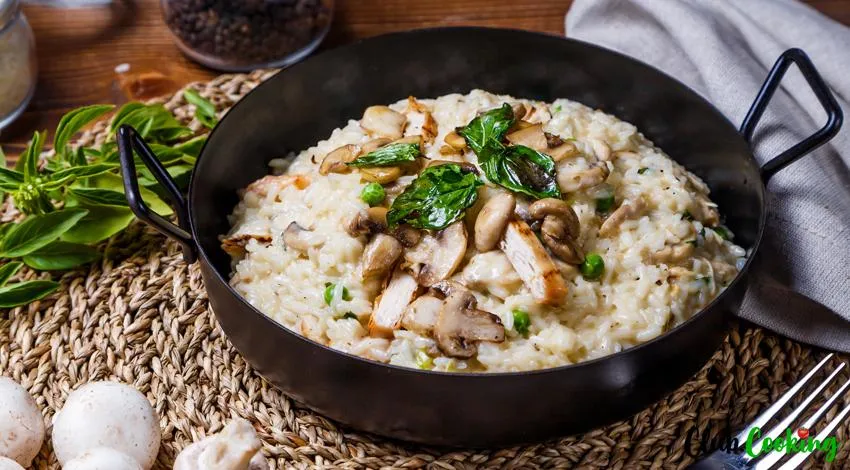
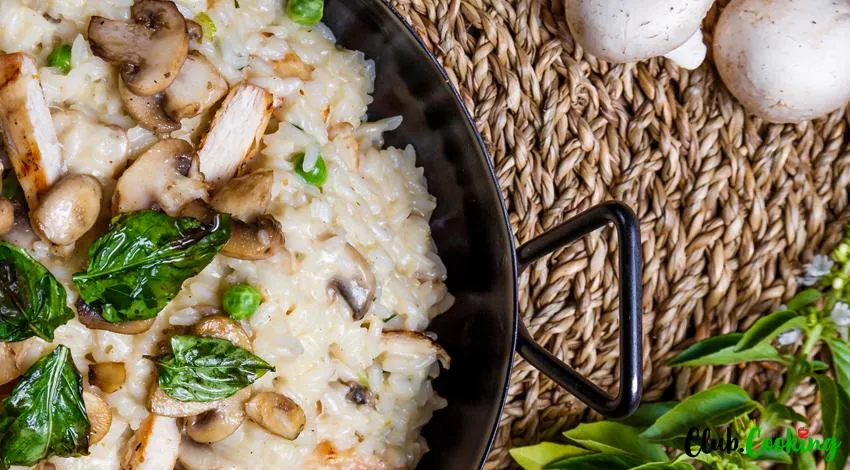
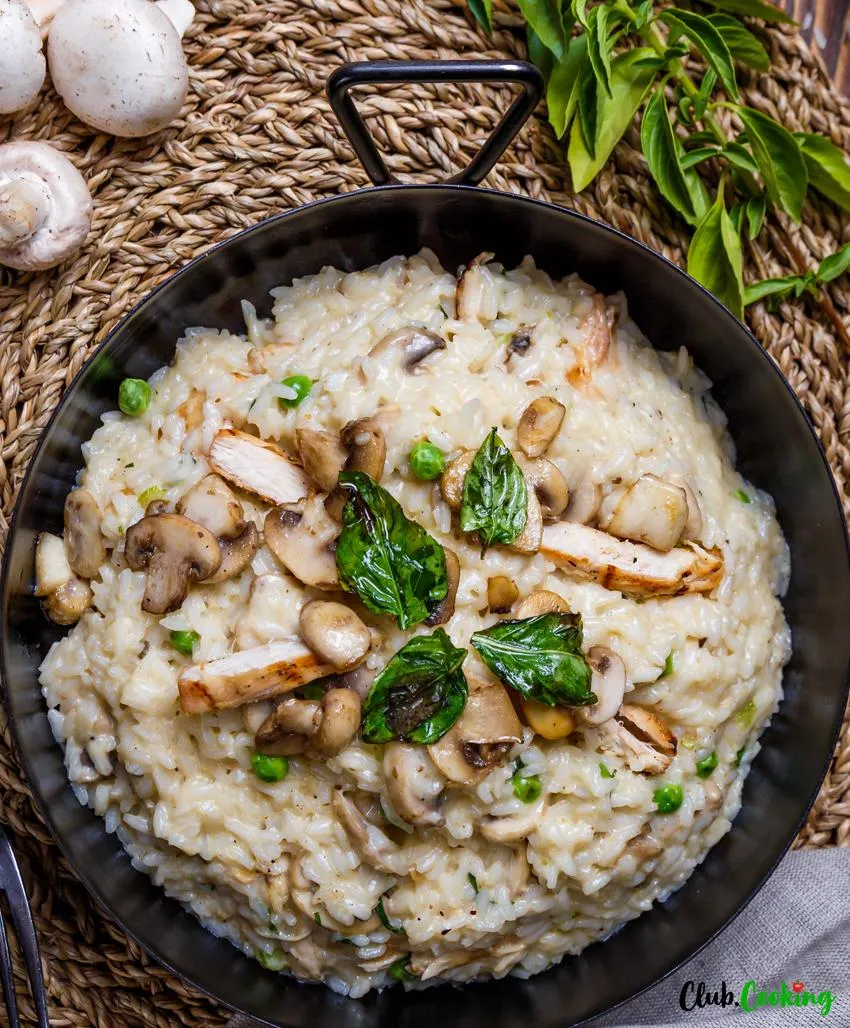
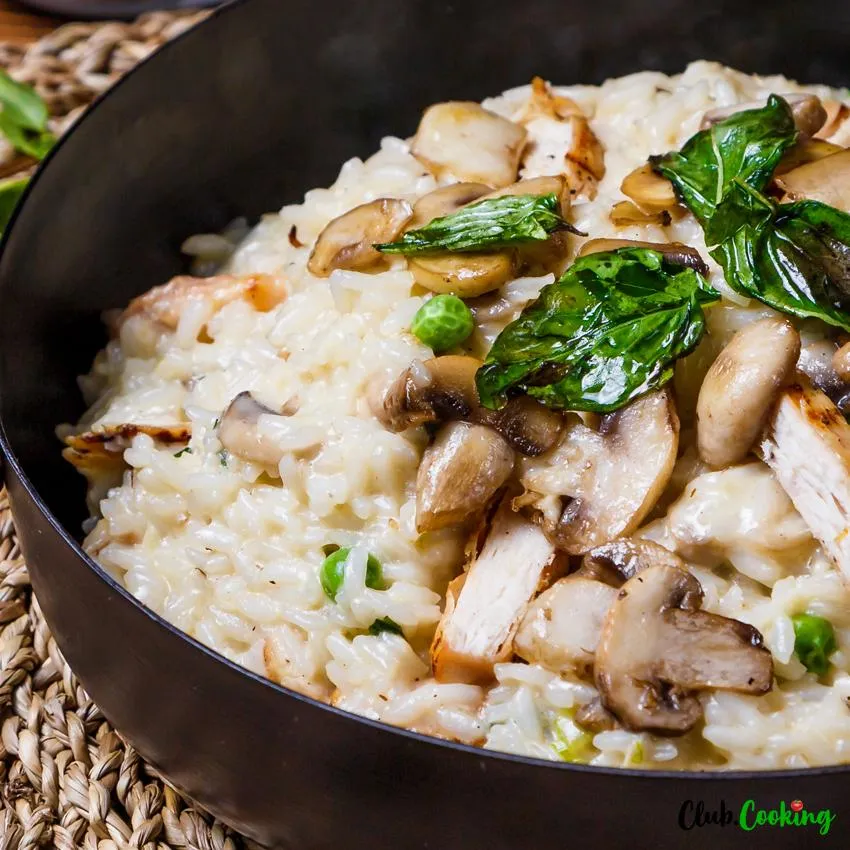
This chicken risotto is made with arborio rice, bite-size pieces of chicken thigh, golden mushrooms, bacon, white wine, chicken broth, butter and Parmesan. Instead of adding the broth a ladle at a time, about 3 cups go in at once and the rice simmers with only an occasional stir. It takes about 50 minutes from start to finish and serves 4 to 6.
How the low-stir method works
Risotto becomes creamy when starch is rubbed off the surface of the rice. Most of that happens at the end, so constant stirring from the start is not required. The rice cooks gently, uncovered, in most of the broth. The rest is added 1/2 cup at a time while you stir, and a final vigorous stir with butter and Parmesan produces the sauce.
Tips
- Brown in stages. Cook the bacon, then the chicken, then the mushrooms in the same pot. Each one leaves flavor on the bottom that the wine lifts later.
- Cook the chicken through. It should reach 165°F (74°C) before you set it aside.
- Do not crowd the mushrooms. Cook them in two batches if needed so they brown and do not steam.
- Toast the rice briefly. One minute on high heat, until the edges of the grains look translucent.
- Finish off the heat. Stir in the butter and Parmesan hard, then loosen with a splash of broth. Risotto should flow, not stand in a mound.
Substitutions
Chicken breast can replace thigh; take care not to overcook it. Leave out the bacon and use a tablespoon of olive oil if you prefer. Replace the wine with extra broth and a teaspoon of lemon juice. Carnaroli rice works like arborio; long-grain rice does not.
Serving and storage
Serve immediately, topped with the bacon and parsley. Refrigerate leftovers within 2 hours and eat within 3 to 4 days. Reheat with a splash of broth, stirring, to 165°F (74°C). Cold leftover risotto can be shaped into risotto balls. Related recipes: Parmesan risotto, seafood risotto and Instant Pot risotto.
FAQ
Do I need to rinse arborio rice?
No. Rinsing washes away the surface starch that makes risotto creamy.
How do I know when risotto is done?
The grains are tender with a slight firmness in the center, usually after 18 to 22 minutes of simmering.