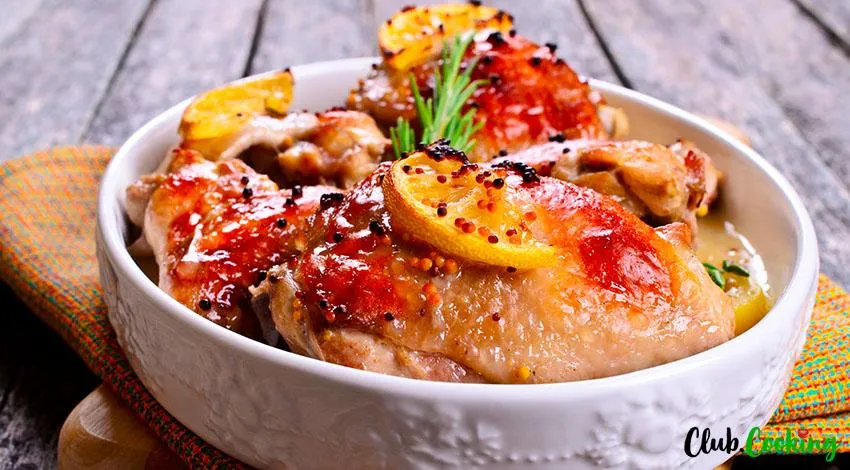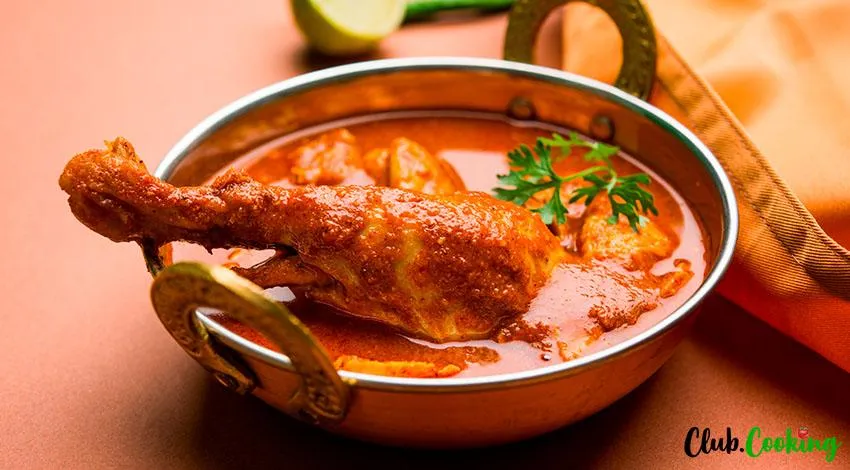
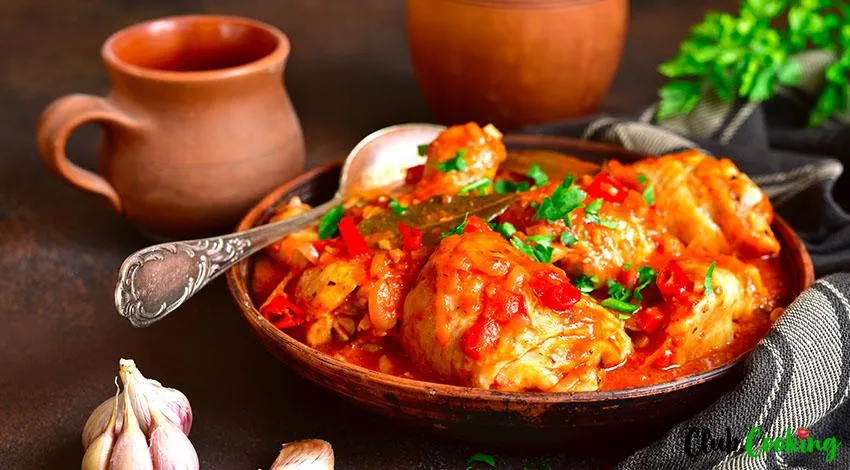
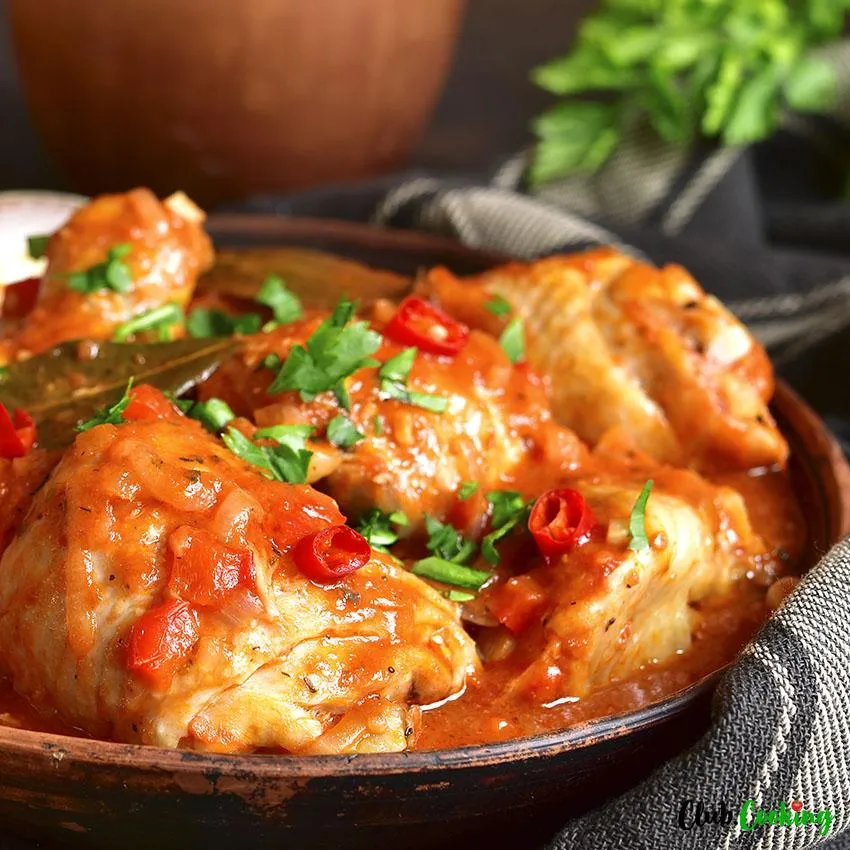
Instant Pot chicken cacciatore is bone-in chicken thighs browned on the saute setting, then pressure cooked with onion, bell pepper, garlic, crushed tomatoes, broth, oregano and basil. The chicken cooks for 12 minutes at high pressure with a 5-minute natural release. Allow about 35 minutes of prep and cooking, plus the time the pot takes to reach pressure. The recipe serves 4.
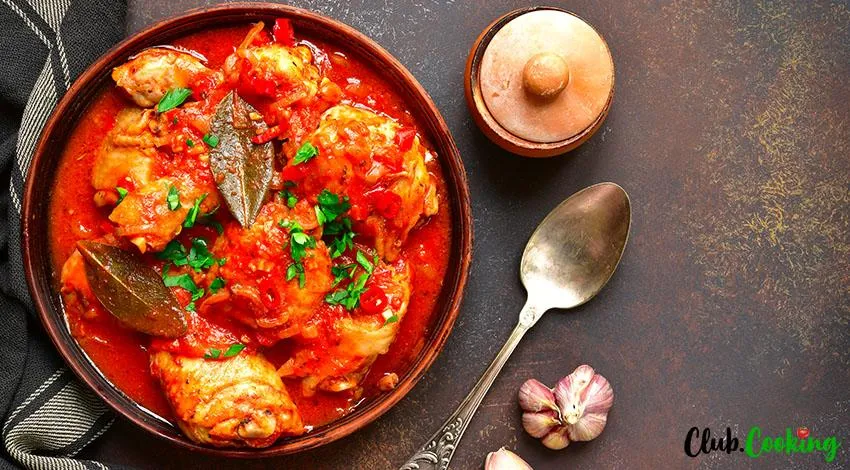
What is chicken cacciatore?
Cacciatore means “hunter” in Italian, and pollo alla cacciatora is chicken braised hunter-style with onions, herbs and usually tomatoes. On the stove it simmers for close to an hour. A pressure cooker gives the same tender, braised result in a fraction of that time.
Tips for Instant Pot chicken cacciatore
- Brown in batches. Three thighs at a time, skin side down first, so they sear instead of steam.
- Deglaze the pot. After the vegetables, pour in the broth and scrape up every browned bit. Stuck bits are the usual cause of a burn warning.
- Layer the tomatoes on top. Add the crushed tomatoes last and do not stir them down to the bottom.
- Check the temperature. Chicken is safe at 165°F (74°C); thighs are most tender at 175°F (79°C).
- Thicken if needed. Remove the chicken and simmer the sauce on saute for 3 to 5 minutes.
Variations
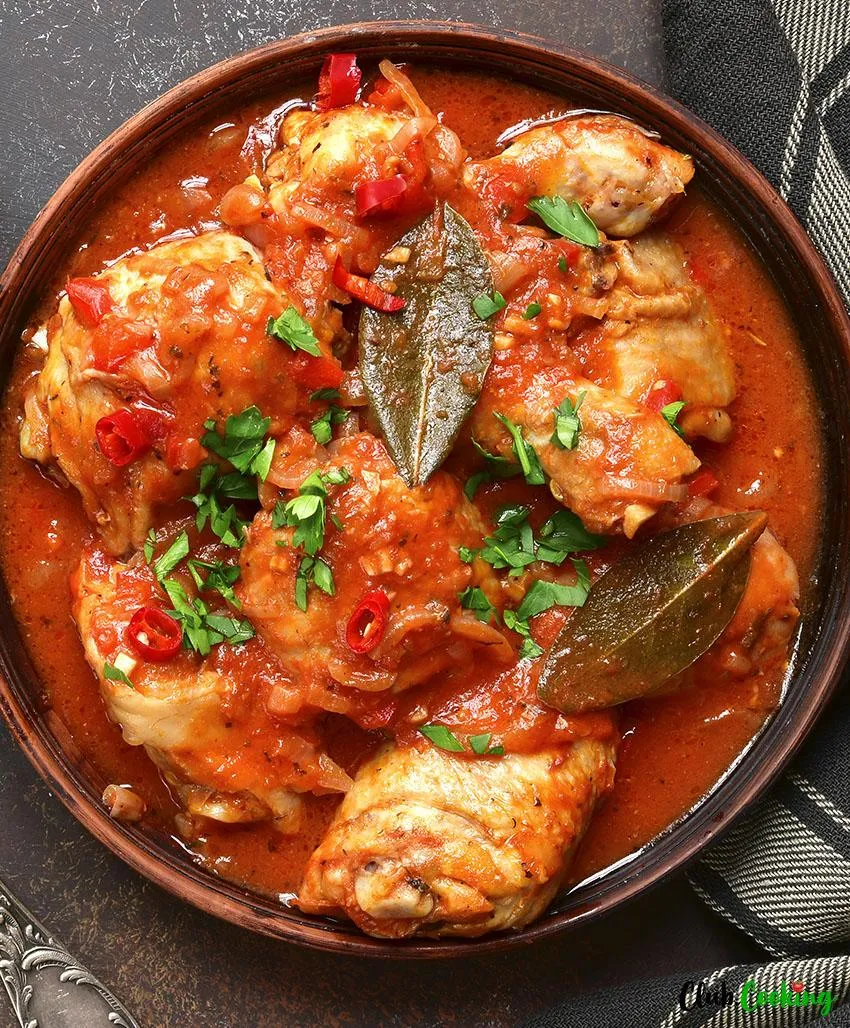
Sliced mushrooms, olives or capers are common additions; add mushrooms with the onion and stir olives or capers in at the end. Half of the broth can be swapped for dry red or white wine. Boneless thighs work with 8 minutes at pressure. For related braises, see chicken scarpariello and chicken Provencal.
Serving and storage
Spoon the chicken and sauce over polenta, rice or pasta such as angel hair, with bread for the sauce. Leftovers keep 3 to 4 days in the fridge and freeze well for up to 3 months. For a plainer weeknight version of the same cut, try Instant Pot chicken thighs.
FAQ
Can I use chicken breasts?
Yes. Use bone-in breasts for 10 minutes or boneless for 6 to 8 minutes, and cook them to 165°F (74°C). They will be leaner and less rich than thighs.
Should I remove the skin?
It is up to you. Skin adds flavor during browning but softens under pressure, so many cooks pull it off before serving.