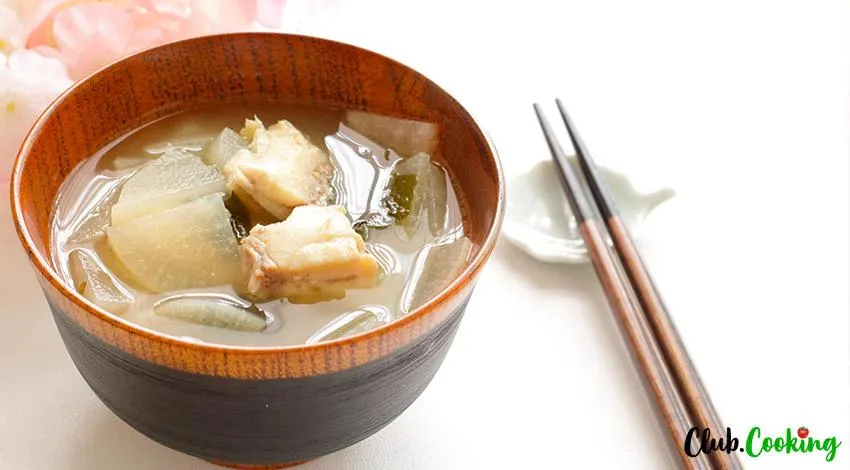

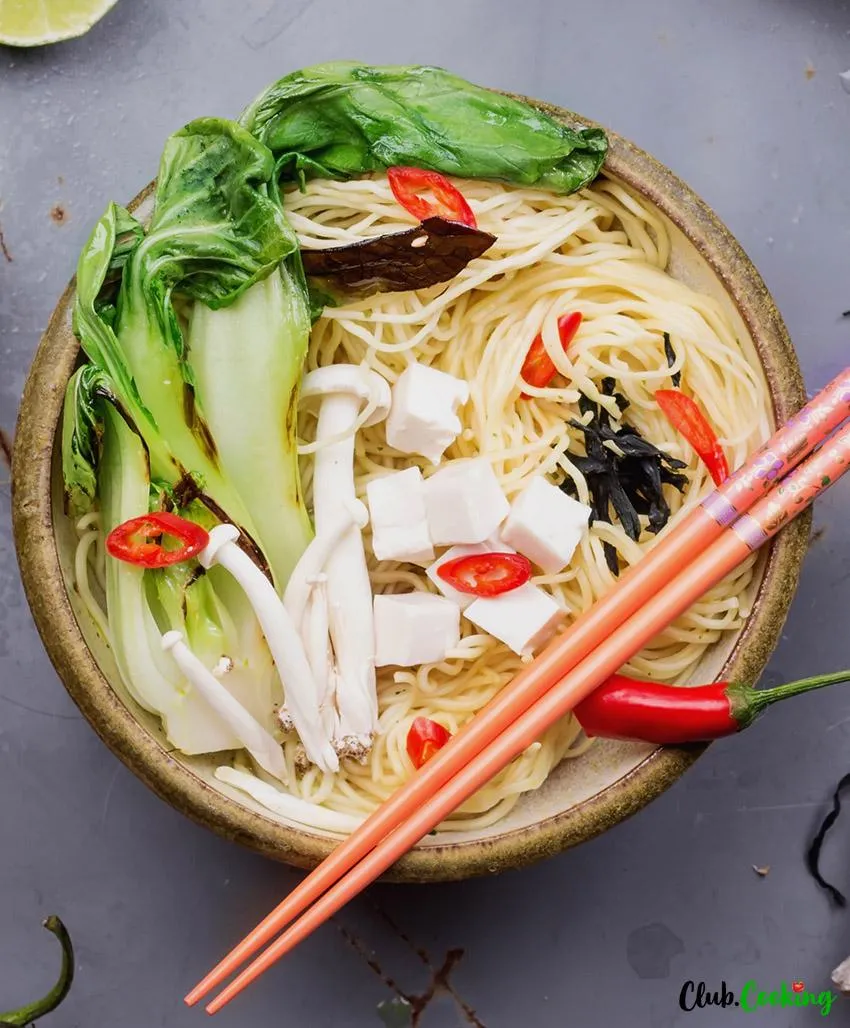
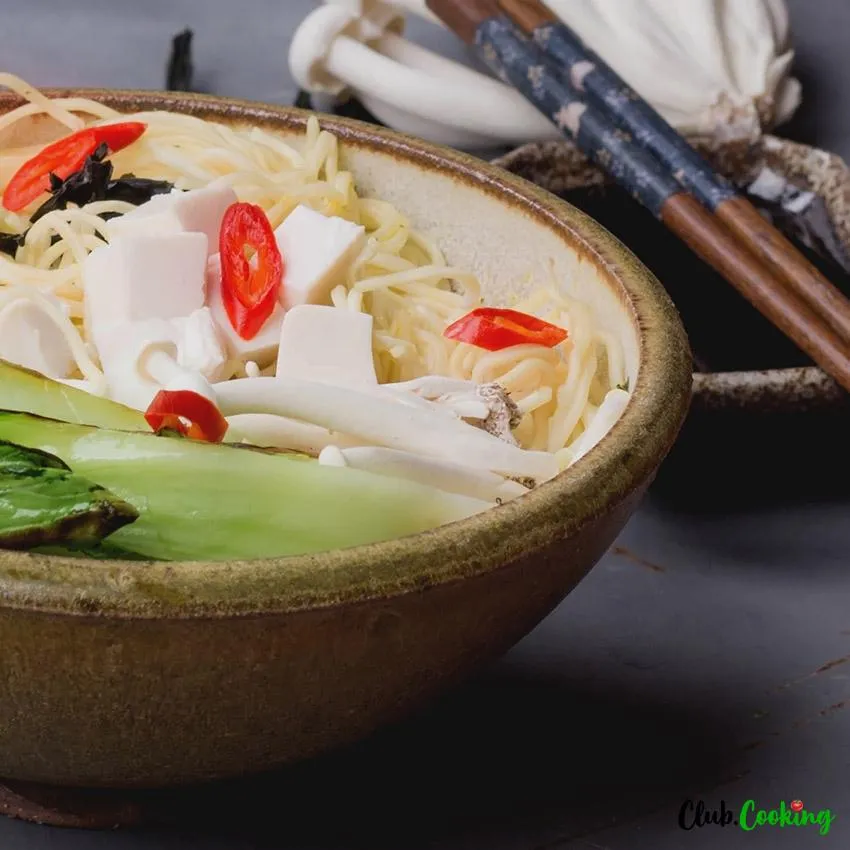
This miso noodle soup is a one-pot bowl of udon noodles in a white miso broth with sauteed shimeji mushrooms, baby bok choy, garlic and cubes of soft tofu, topped with green onions and sesame seeds. It is ready in about 15 minutes and makes 4 to 6 servings. The recipe uses no meat or fish; check the miso label if you need it fully vegan, since some pastes contain bonito.

Choosing the miso and noodles
White miso (shiro miso) is the mildest and slightly sweet, which suits a simple broth made with water. Yellow miso also works; red miso is saltier and stronger, so start with less. The recipe uses the soft, pre-cooked udon sold in 200 g vacuum packets, which only need 1 to 2 minutes in the pot to loosen. Dried or frozen udon should be cooked according to the package first.
Tips
- Brown the mushrooms first. Five minutes in hot oil gives them color, and the browned bits left in the pot flavor the broth when the water goes in.
- Do not boil the miso. Bring the water to a boil, lower it to a simmer, then whisk in the paste. Hard boiling dulls its flavor.
- Dissolve the paste in a ladle of hot water before adding it, so no lumps are left.
- Add the tofu last. Soft tofu breaks easily, so stir gently and just heat it through.
Substitutions and additions
Shiitake or cremini mushrooms can replace shimeji, and spinach or napa cabbage can stand in for bok choy. Ramen or soba noodles work in place of udon. Optional extras include a soft-boiled egg, a sheet of nori, or sriracha for heat. For a deeper broth, replace part of the water with vegetable stock.
Serving and storage
Serve right away; udon keeps soaking up broth as it sits. If you plan on leftovers, store the noodles and broth separately for 3 to 4 days in the refrigerator and reheat gently without boiling. For more noodle bowls, see chicken ramen, Japanese mushroom soup and gyoza soup.
FAQ
Which noodles are best for miso soup?
Udon, ramen and soba all work. Udon is the thickest and chewiest.
How much miso per cup of water?
This recipe uses 1/4 cup for 6 cups of water, about 2 teaspoons per cup. Add more to taste.