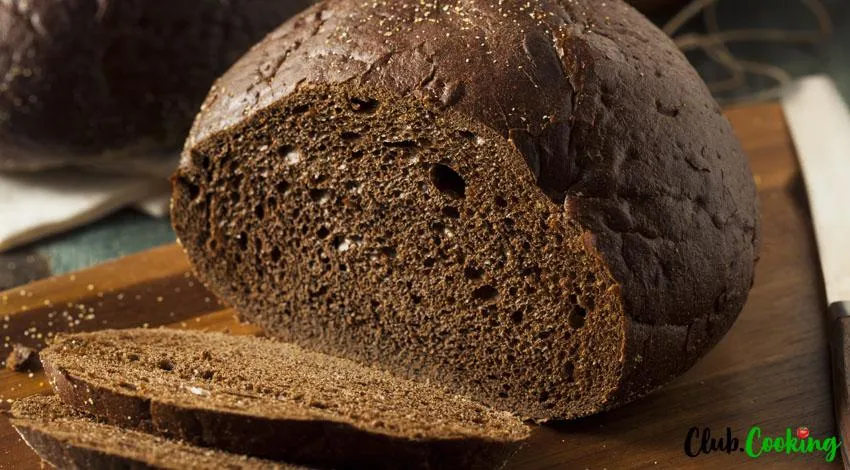
Pumpernickel bread is a dark, slightly sweet rye loaf, and this home version gets its deep color and flavor from rye flour, molasses and cocoa powder. It bakes in a loaf pan at 350°F (175°C) and makes 10 slices. The recipe card lists 30 minutes of prep and 40 to 50 minutes of baking; the dough also rises for about 1 1/2 hours in total, so plan on roughly 3 hours from start to finish.
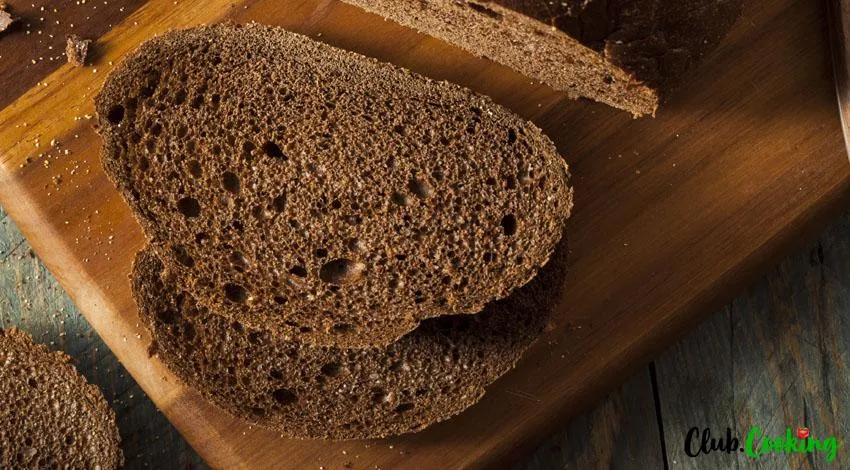
What is pumpernickel bread?
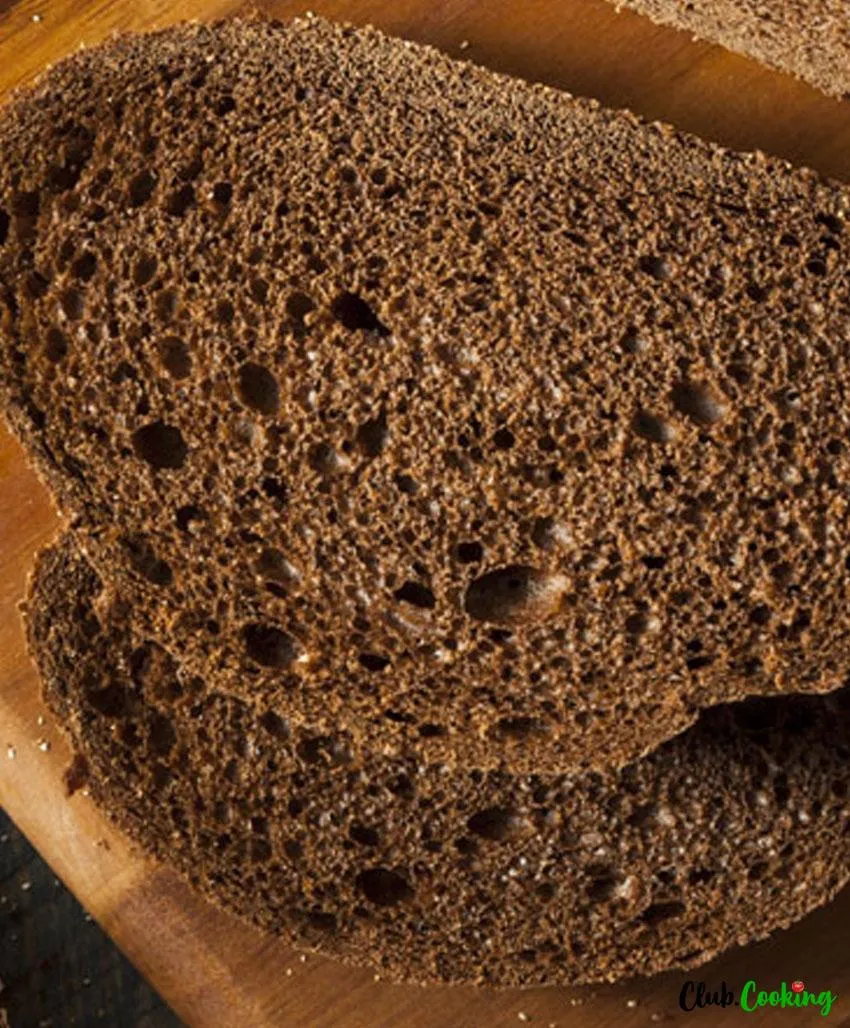
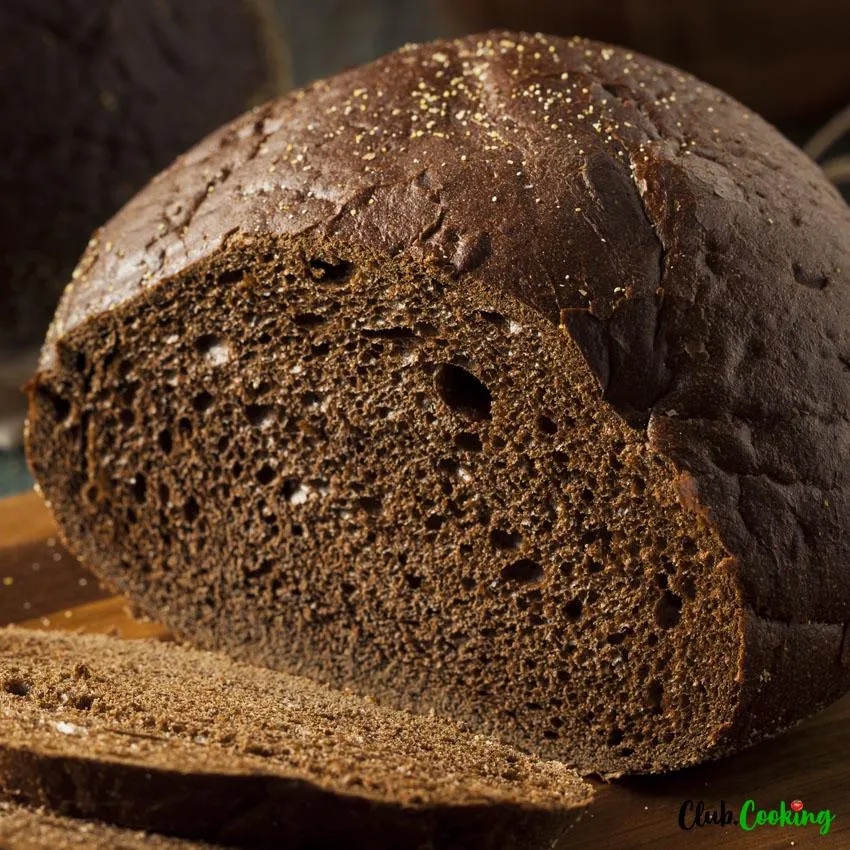
Pumpernickel comes from Westphalia in Germany, where it is traditionally made from coarse rye meal and baked at low temperature for many hours, which caramelizes the grain and turns it almost black. American-style pumpernickel, like this one, is a faster yeast bread. It uses a mix of rye, whole-wheat and bread flours and adds molasses and cocoa for the characteristic dark color and earthy, bittersweet taste. The result is a soft, sliceable sandwich loaf with a tight crumb.
Key ingredients
- Rye flour. Gives the classic tangy, earthy flavor. Rye has little gluten of its own, so it is balanced with other flours.
- Vital wheat gluten. Two tablespoons boost the dough’s structure so the loaf rises well despite the heavy rye and whole-wheat flours.
- Molasses and cocoa. Both deepen the color; molasses adds sweetness and moisture, and unsweetened cocoa adds a subtle bitterness without tasting like chocolate.
- Cornmeal. Adds a little texture and a pleasant, slightly nutty bite.
- Active dry yeast. One package (about 2 1/4 teaspoons) is proofed in warm water, around 105 to 110°F (40 to 43°C), with the molasses.
How the dough comes together
Stir the warm water, molasses and yeast together and let the mixture stand for about 5 minutes until it looks foamy, then add the oil. Combine all the flours, cornmeal, cocoa, gluten and salt and add them gradually, mixing for about 15 minutes, ideally in a stand mixer with a dough hook. Knead briefly by hand until smooth and elastic, then let the dough rise in a greased bowl, shape it into an oiled loaf pan and let it rise again before baking.
Tips for the best pumpernickel
- Check the water temperature. Water that is too hot can kill the yeast; it should feel warm, not hot, on your wrist.
- Add flour sparingly. Rye dough stays a little tacky. Add only enough extra bread flour to stop it sticking, or the loaf will be dense.
- Judge the rise by size. Rising times depend on room temperature; wait until the dough has visibly doubled, even if it takes longer.
- Test for doneness. The loaf should sound hollow when tapped on the bottom, or read about 190 to 200°F (88 to 93°C) inside.
- Cool before slicing. Rye breads finish setting as they cool, so slicing too early gives a gummy crumb.
How to serve and store it
Pumpernickel is excellent with smoked salmon and cream cheese, in a Reuben-style sandwich or simply toasted with butter. It pairs nicely with a smoked salmon dip, and you can hollow out a round loaf for dips just like a bread bowl. For another hearty loaf, try multi-grain bread. Store the cooled bread wrapped at room temperature for a few days or freeze slices for longer.
FAQ
What is the difference between pumpernickel and rye bread?
Both use rye flour, but pumpernickel is darker and sweeter. Traditional pumpernickel uses coarse rye meal and a very long, slow bake, while American versions add molasses and cocoa for color.
Does pumpernickel bread taste like chocolate?
No. The cocoa powder is unsweetened and used in a small amount, so it adds color and a mild bitterness rather than a chocolate flavor.
Can I make pumpernickel without vital wheat gluten?
You can, but the loaf will rise less and be denser. Replacing the gluten with an equal amount of bread flour is the simplest swap.