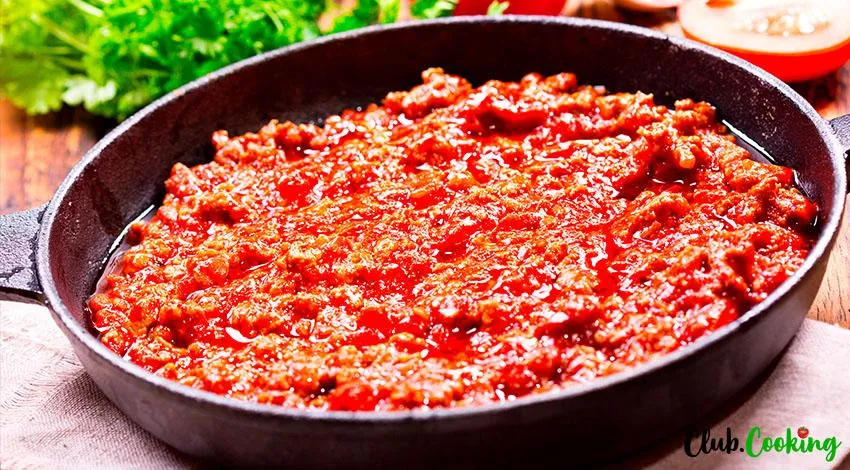
Bolognese sauce is a slow-cooked Italian meat sauce. This version starts with onion, carrot and celery, adds ground beef and garlic, then dry white wine, crushed tomatoes, tomato paste, broth and a bay leaf. After an hour of simmering, whole milk is stirred in and the sauce cooks 45 minutes more. Plan on about 2 hours 10 minutes; it serves 6.
What makes it Bolognese
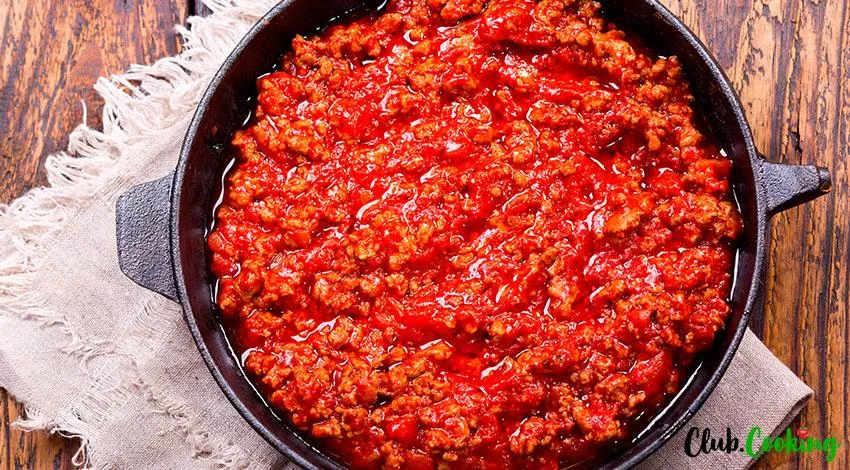
The sauce comes from Bologna in northern Italy, where it is called ragu. Compared with an American spaghetti meat sauce, it has more meat and less tomato, and it is built on a base of finely chopped vegetables. Milk is a traditional addition: it softens the acidity of the wine and tomato and gives the meat a tender, velvety texture.
Cooking stages
| Stage | Time |
|---|---|
| Soften onion, carrot, celery | about 7 minutes |
| Brown beef with garlic | about 8 minutes |
| Reduce the wine | until almost evaporated |
| Simmer with tomatoes and broth | 1 hour |
| Simmer with milk, covered | about 45 minutes |
Tips
- Chop the vegetables finely. They should melt into the sauce.
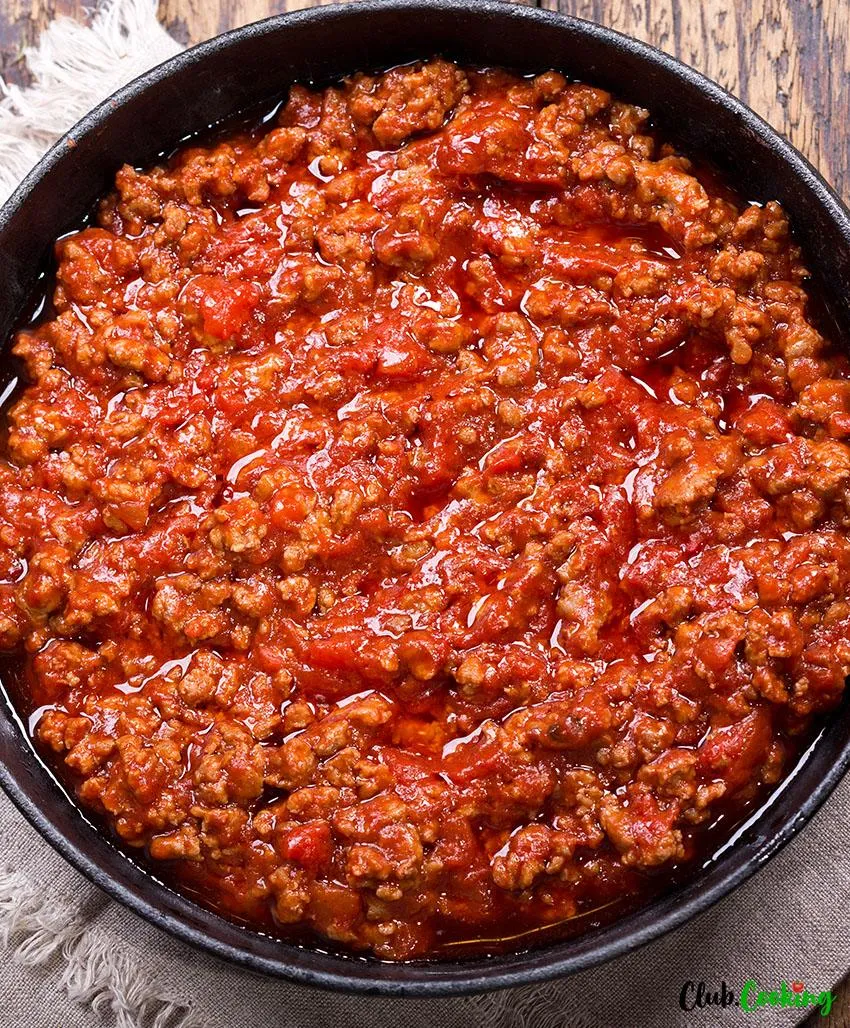
- Break up the beef. Small crumbles give the right texture. Cook until no pink remains.
- Keep the simmer low. A few lazy bubbles are enough. Add a splash of broth if the sauce gets too thick.
- Add milk gradually. Stir it in a little at a time.
- Season at the end. The sauce reduces, so salt it after cooking.
Serving and storage
Wide, flat pasta such as tagliatelle, pappardelle or fettuccine holds the sauce best, though spaghetti Bolognese is the popular choice. The sauce is also a classic filling for homemade lasagna. Refrigerate for 3 to 4 days or freeze for up to 3 months. For a quicker weeknight option, see this spaghetti sauce.
FAQ
Can I use red wine instead of white?
Yes. Red wine makes a darker, more robust sauce. Without wine, use the same amount of broth.
Why put milk in Bolognese?
It balances acidity and makes the meat tender. The sauce does not taste milky once it has cooked down.
Can I mix meats?
Yes. Half ground beef and half ground pork is a common variation.