
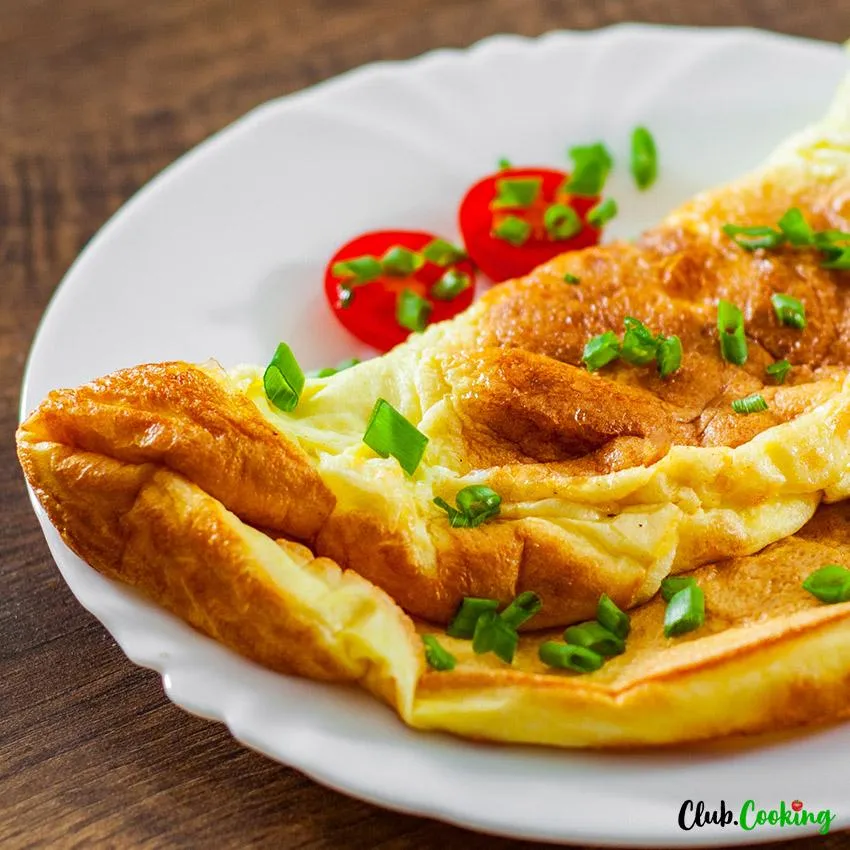
To make a cheese omelette, beat 2 large eggs with salt and pepper, cook them gently in a small non-stick pan with 1/2 tablespoon of butter or olive oil, sprinkle 1/2 cup of shredded Cheddar over the top while it is still slightly wet, and fold it in half. It serves 1 and takes under 20 minutes from cracking the eggs to the plate. The result should be soft and just set inside, with the cheese fully melted.

How to make a cheese omelette, step by step
Making a cheese omelette is a short sequence, and each stage has a visual cue.
- Beat. Whisk the eggs with a fork until no streaks of white remain, about 30 seconds. Season now so the salt is evenly spread.
- Warm the pan. Low heat, then the fat. Butter should foam but not brown.
- Pour and swirl. Tilt the pan so the egg covers the base, and stir gently with a fork for the first 20 seconds so soft curds form. Then leave it alone.
- Add the cheese. When the edges are firm but the top still has a little raw egg, scatter the Cheddar over it.
- Fold and slide. Ease a spatula around the edge, fold the omelette in half, and slide it onto a plate as soon as the underside starts to turn pale golden.
The key: low, gentle heat
Most omelettes go wrong because the pan is too hot. High heat makes the outside brown and rubbery before the middle sets, and it leaves no time for the cheese to melt. Warm the pan over low to medium-low heat, add the butter, and wait until it foams. Then pour in the eggs. On gentle heat the eggs set in a few minutes and stay tender.
The omelette also keeps cooking after it leaves the pan. Take it off the heat while the center still looks a little glossy; by the time it reaches the table it will be set.
How to make a cheese omelette fluffy
- Beat well. Fully combined eggs set evenly, without tough ribbons of white.
- Swirl, then leave it. Early stirring creates curds, which give height. Stirring late breaks the omelette.
- Add the cheese early enough. Sprinkle it on while the top is still slightly wet; the remaining heat melts it as you fold.
- Use the right pan. An 8-inch (20 cm) non-stick pan is right for 2 eggs. A larger pan makes a thin omelette that tears when folded.
For an even lighter texture, see our fluffy omelette.

Best cheese for an omelette
Mild or sharp Cheddar melts smoothly and is the classic choice. Grate the cheese finely so it melts before the eggs overcook; the 1/2 cup in this recipe is a generous amount for 2 eggs, so reduce it if you prefer more egg than cheese.
| Cheese | What it gives |
|---|---|
| Cheddar, mild or sharp | Smooth melt, familiar tangy flavor |
| Gruyère | Nutty, French-style omelette |
| Monterey Jack | Mild and extra stretchy |
| Mozzarella | Very stretchy, mild; needs seasoning |
| Goat cheese or feta | Tangy; softens but does not melt fully |
Cheese you shred yourself usually melts more smoothly than pre-shredded cheese, which is coated to stop it from clumping.
Butter or olive oil?
Either works. Butter adds flavor and its foam is a built-in temperature gauge: foaming means ready, browning means too hot. Olive oil gives a cleaner taste and is more forgiving on heat. Use about 1/2 tablespoon, enough to coat the base of the pan.
Easy add-ins
Chopped chives, ham, sautéed mushrooms, spinach or diced tomato all work. Cook watery vegetables first and keep fillings to about 1/3 cup so the omelette folds without tearing. Add them with the cheese, on one half only. For more ideas, try the western omelette or mushroom omelette.
Troubleshooting
- Brown and dry: the heat was too high or it cooked too long. Aim for a pale golden underside, not a deep brown one.
- Cheese not melted: it went on too late or was grated too coarsely. Cover the pan for a few seconds after folding to trap heat.
- Tears when folding: the pan was too large, the omelette was overfilled, or it was not loosened around the edges first.
- Sticks to the pan: the non-stick surface is worn, or the pan was not warm before the eggs went in.
- Watery: too much milk in the eggs, or raw vegetables releasing liquid.
What to serve with a cheese omelette
Buttered toast is the standard partner. For breakfast, add fruit or sliced tomato; for lunch or a quick dinner, a green salad or roasted potatoes turn it into a full plate. An omelette is best eaten straight from the pan. If you need to hold one, keep it for no more than a few minutes on a warm plate, since reheated eggs turn firm.
Frequently Asked Questions
How do you make a cheese omelette with 2 eggs?
Beat the 2 eggs with salt and pepper, cook them over low heat in a small non-stick pan with 1/2 tablespoon of butter or oil, add 1/2 cup of shredded Cheddar when the top is almost set, and fold in half.
When do you add cheese to an omelette?
Add it when the omelette has begun to firm up but still has a little raw egg on top. That thin wet layer and the fold trap enough heat to melt the cheese.
Should I add milk to the eggs?
It is optional. A tablespoon of milk or water makes the omelette slightly softer, but too much makes it watery.
Why is my omelette brown and dry?
The heat was too high or it cooked too long. Take it off the heat while the center still looks a little glossy.
What size pan should I use for a cheese omelette?
An 8-inch (20 cm) non-stick pan is right for 2 eggs. A larger pan makes a thin omelette that tears when folded.
How many eggs are in a cheese omelette?
This recipe uses 2 large eggs for one serving. For two people, make two omelettes one after the other instead of doubling the eggs in a small pan.