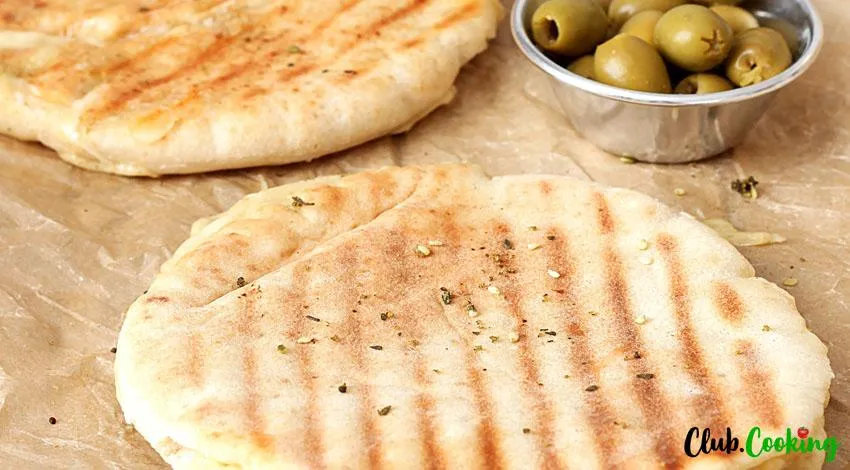
This gluten-free pita bread is a yeast flatbread made from brown rice flour, sorghum flour and tapioca flour, bound with xanthan gum and one egg. The dough rises for 2 to 3 hours, is rolled into 5 to 6 inch rounds and baked on a preheated sheet at 500°F (260°C) for about 6 minutes. The recipe makes 10 to 12 pitas and takes about 3 hours 40 minutes, mostly rising time.
What each flour does
| Ingredient | Role |
|---|---|
| Brown rice flour | Structure and a mild, nutty base |
| Sorghum flour | Soft crumb and a wheat-like flavor |
| Tapioca flour | Stretch and chew |
| Xanthan gum | Replaces gluten so the dough holds together |
Tips
- Add the water gradually. Flours absorb differently. Stop when the dough is soft and tacky but still holds a shape.
- Flour the surface well. Use rice flour for rolling; gluten-free dough is fragile and sticks easily.
- Keep the 1/4-inch thickness. Thinner rounds dry out and crack.
- Preheat the baking sheet. The burst of heat from below is what makes the bread puff.
- Cover the finished pitas. Stack them under a clean towel so the steam keeps them flexible.
What to expect
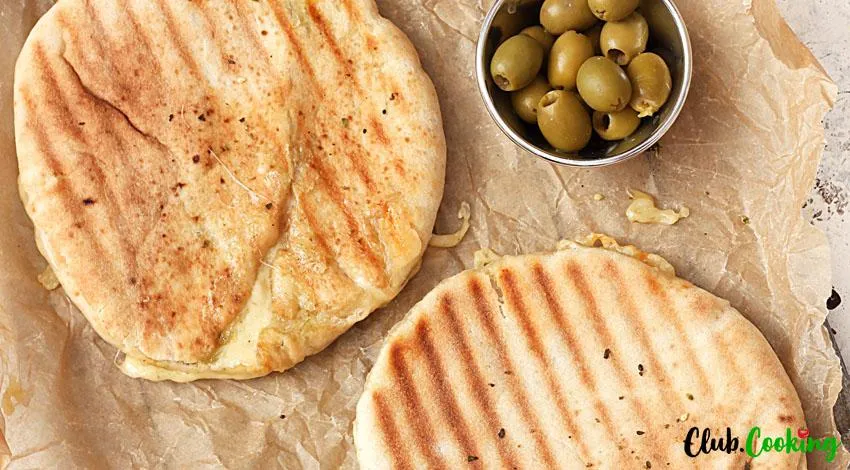
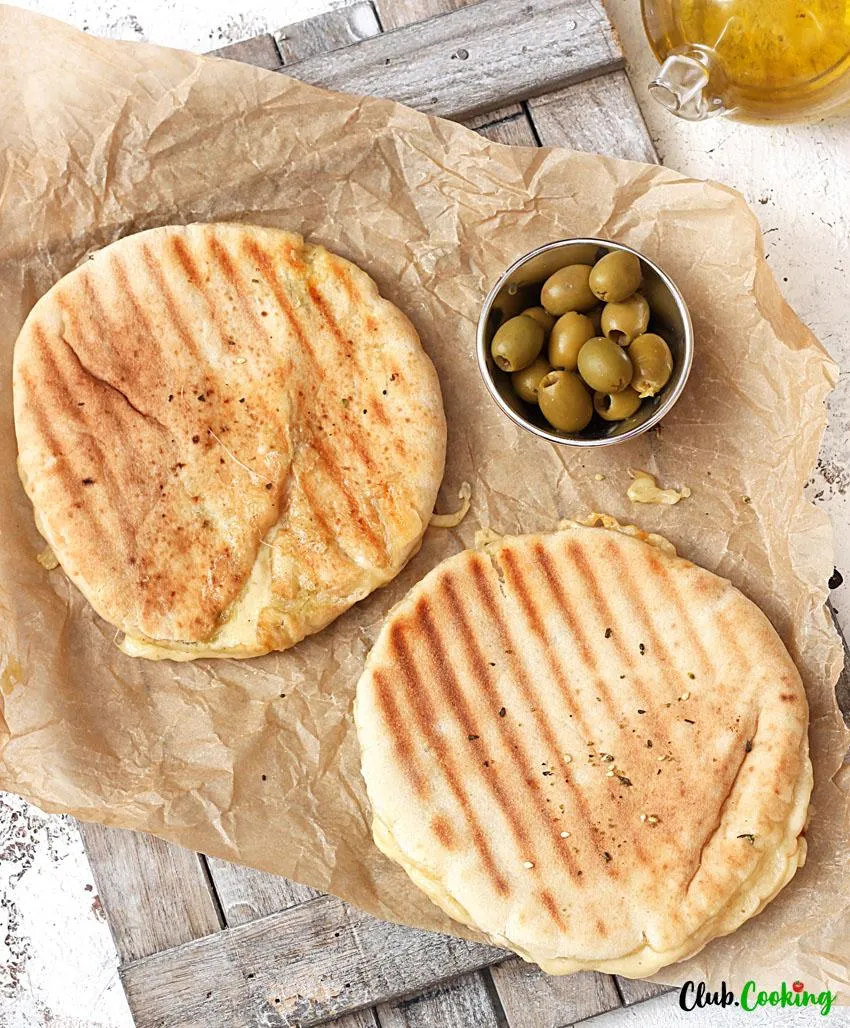
Gluten-free pitas puff, but the pocket is usually smaller and less even than in wheat pita. If a round does not open, use it as a flatbread or wrap. They are at their best warm from the oven.
Serving and storage
Serve with hummus, tzatziki sauce or tahini sauce, or fill with grilled meat and vegetables. Store cooled pitas in a sealed bag for 1 day at room temperature, or freeze with parchment between them for up to 3 months. Reheat in a hot dry skillet for 30 seconds per side. For a gluten-free loaf, see rice bread.
FAQ
Why did my gluten-free pita not puff?
The oven or the sheet was not hot enough, or the dough was rolled too thin. Preheat for a full 20 minutes.
Can I use a gluten-free flour blend?
Possibly, but blends vary. If yours already contains xanthan gum, leave out the gum listed here.
Can I leave out the egg?
The egg adds structure. Without it the pitas are more brittle.