

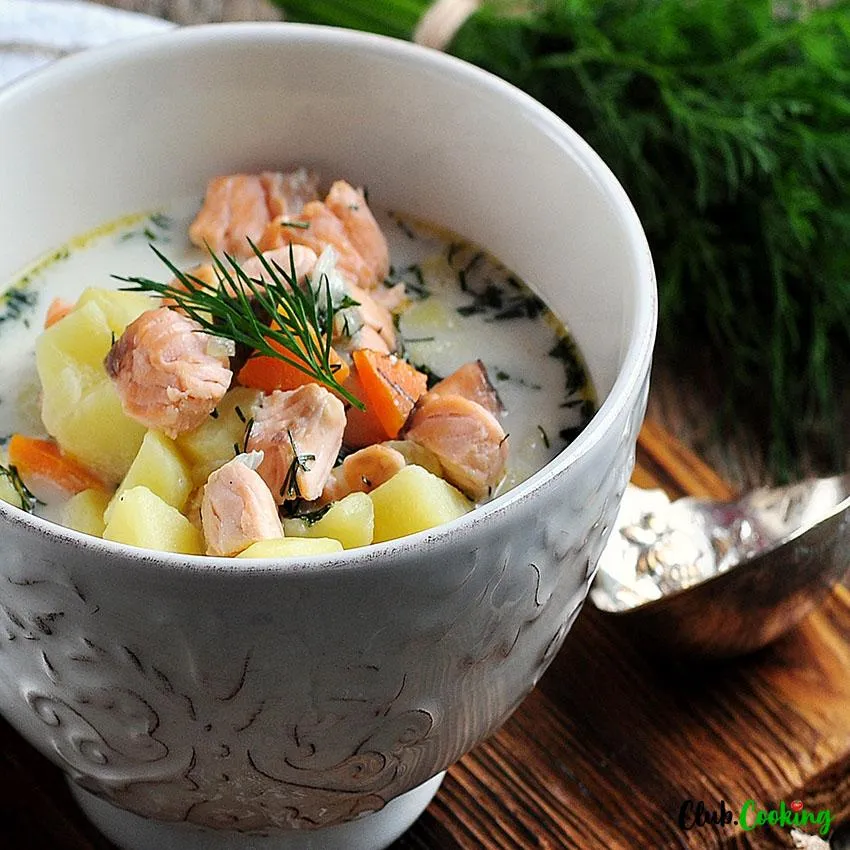
This salmon soup is a simple milk-based soup: butter and flour are cooked into a roux, hot milk infused with a slice of onion is stirred in until lightly thickened, and canned salmon is added with its liquid. It is seasoned with salt and pepper and finished with parsley. The recipe allows about an hour in total, though most of that is unhurried stirring, and it serves 4.

How the soup is built
The base is a thin white sauce. One tablespoon each of butter and flour thickens 3 cups of milk only slightly, so the result is a light, pourable soup and not a thick chowder. Scalding the milk with the onion first gives a mild onion flavor without pieces in the bowl.
Tips
- Cook the roux briefly. Stir the flour into the melted butter for about a minute over medium-low heat. It should bubble but not brown.
- Scald, do not boil. Heat the milk until small bubbles form at the edge of the pan, then remove the onion.
- Add the milk gradually. Pour in a little at a time and whisk constantly to prevent lumps.
- Keep the heat low. Milk scorches and can curdle if it boils hard.
- Pick over the salmon. Remove the bones and skin, then add the fish with the liquid from the can for flavor.

Variations
For a thicker soup, use 2 tablespoons each of butter and flour. As options, add diced cooked potatoes, corn or a handful of peas and heat through, or finish with fresh dill and a squeeze of lemon. Leftover cooked salmon can replace canned; add a little broth to make up for the missing can liquid.
Serving and storage
Serve hot with oyster crackers, toast or corn bread. Cool leftovers quickly and refrigerate for up to 3 days. Reheat gently over low heat, stirring, without boiling. Milk-based soups tend to separate when frozen, so freezing is not recommended. More seafood soups: fish soup, shrimp bisque and shrimp and corn soup.
FAQ
What kind of canned salmon is best for soup?
Pink salmon is mild and inexpensive. Red (sockeye) salmon has a deeper color and stronger flavor.
Why did my soup curdle?
The heat was too high. Keep it below a simmer once the milk is in.