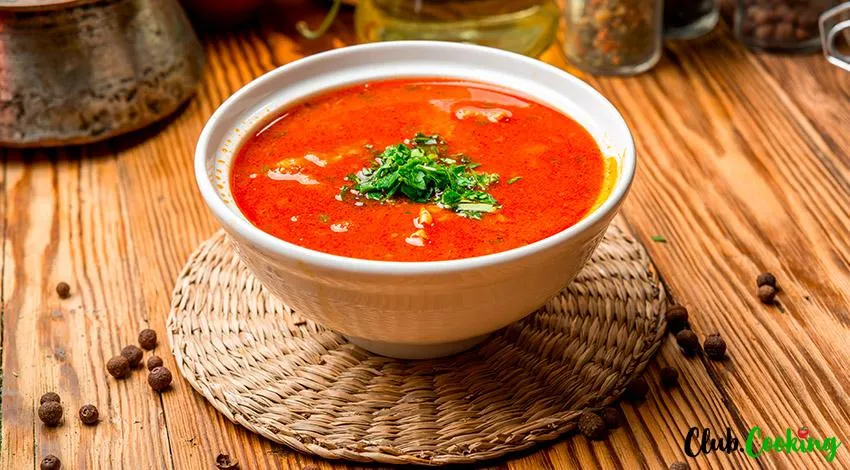
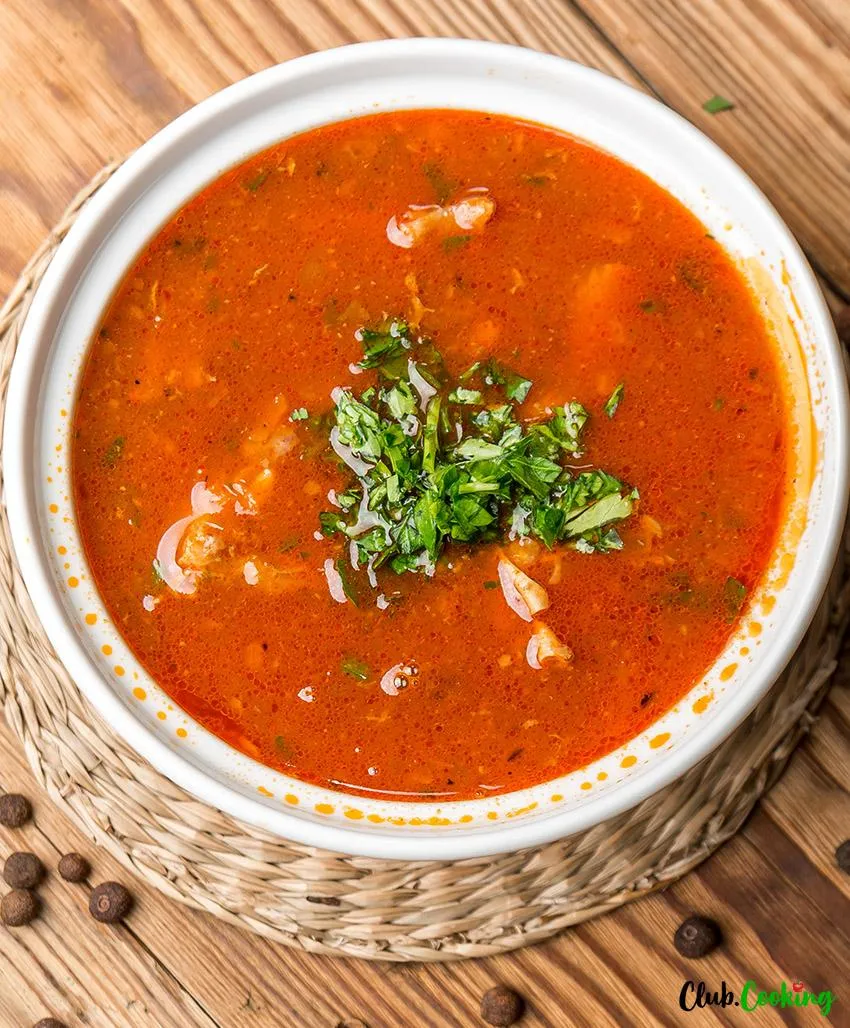
Rasam is a thin, tangy, peppery soup from South India. This version is built on tamarind water and one tomato, seasoned with freshly crushed black pepper, cumin, black mustard seeds, a whole head of garlic, dried red chilies and turmeric, and finished with fresh coriander (cilantro). It takes about 20 minutes and makes 4 servings, either poured over basmati rice or strained and sipped from a mug.
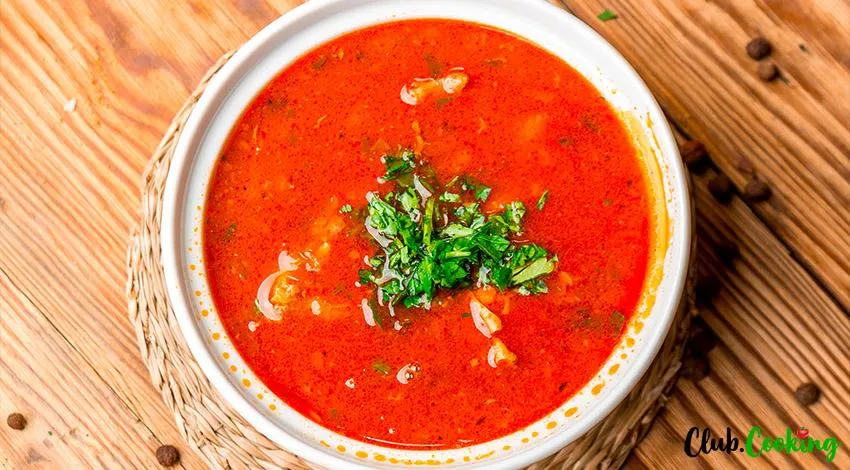
What rasam tastes like
Rasam is sour first, then hot from black pepper rather than from chili alone. It is a broth, not a thick soup, and is usually eaten with rice as part of a meal. Many versions also include cooked lentils or a ready-made rasam powder; this one keeps to whole spices crushed by hand.
Working with tamarind
Soak 4 to 5 tablespoons of tamarind pulp in 2 cups of warm water for about 10 minutes, squeeze it with your fingers, then strain and keep only the liquid. If you use tamarind concentrate from a jar, it is much stronger: start with 1 to 2 teaspoons stirred into the 2 cups of water and adjust to taste.
Tips
- Crush, do not grind to powder. A coarse mix of pepper, cumin and mustard seeds with the garlic mashed to a paste gives the right texture and aroma.
- Add turmeric late. It needs only about 10 seconds in the hot oil before the liquid goes in, or it turns bitter.
- Dilute to taste. After 15 minutes of simmering, add half a cup of water, taste, and add more if the soup is too sour or too strong.
- Salt at the end. Salt balances the sourness, so adjust it after diluting.
Serving and storage
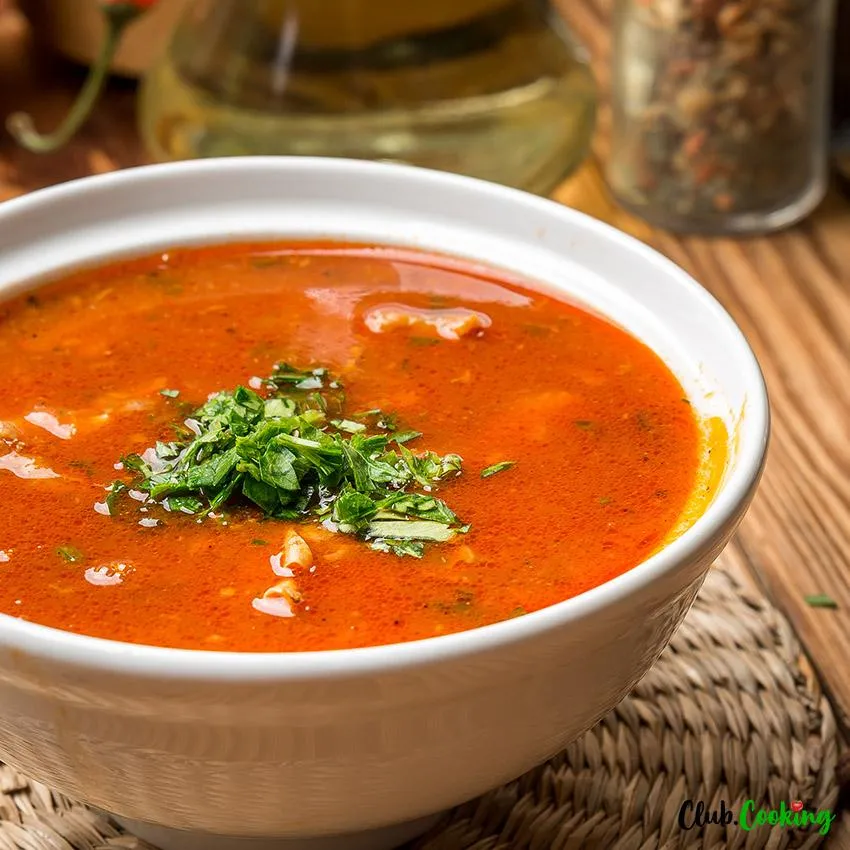
Ladle rasam over hot basmati rice, or strain out the solids and serve it as a clear drink at the start of a meal. It keeps 3 to 4 days in the refrigerator and the flavor deepens overnight. For a fuller Indian meal, pair it with dal soup, potato curry and Indian bread.
FAQ
Is rasam the same as sambar?
No. Sambar is thicker, with lentils and vegetables. Rasam is a thin, sour and peppery broth.
Can I make rasam without tamarind?
Yes. Use two extra tomatoes and a squeeze of lemon juice at the end for the sourness.