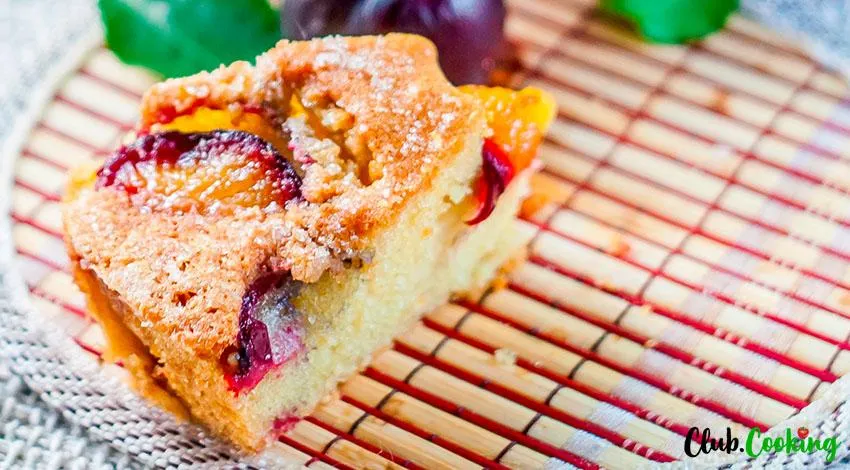
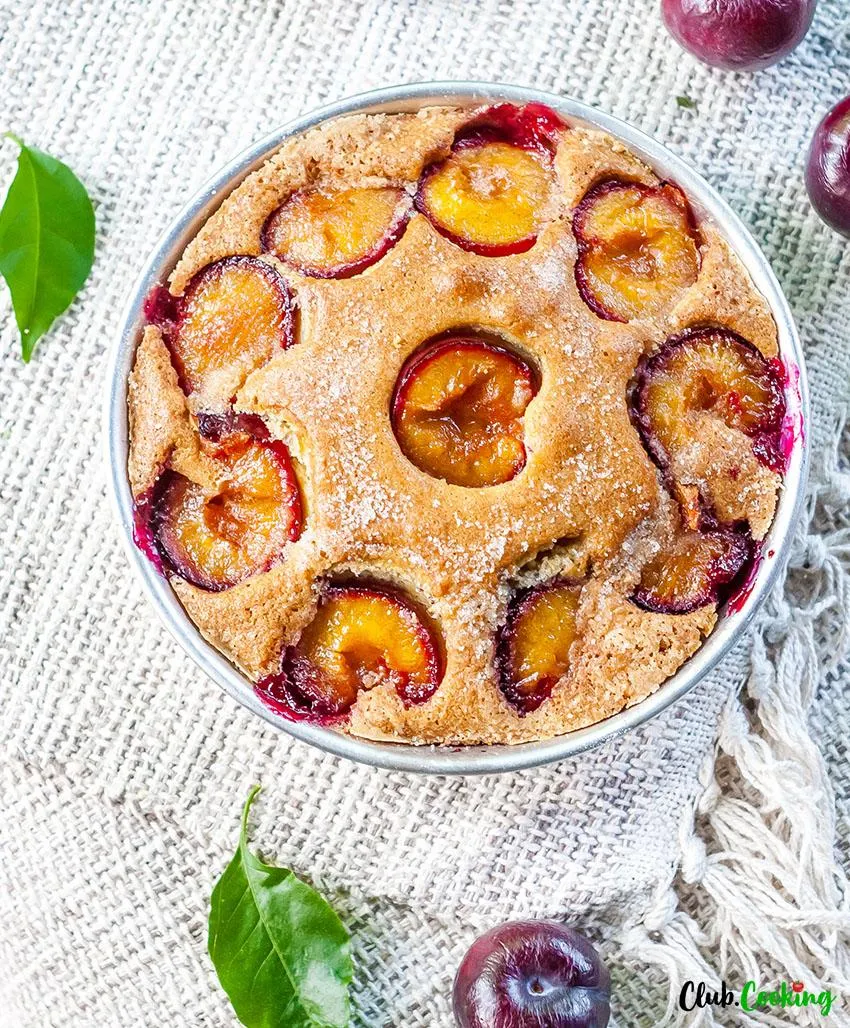
This plum cake recipe is a buttery, tender single-layer cake topped with fresh plum slices that soften and caramelize in the oven. The batter is made from flour, butter, sugar, 3 eggs, baking powder and a little pumpkin pie spice, and it is topped with 6 to 8 plums cut into eighths. It takes 15 minutes to prepare, bakes for 55 minutes at 350°F (175°C) and cuts into 12 slices.
What is plum cake?
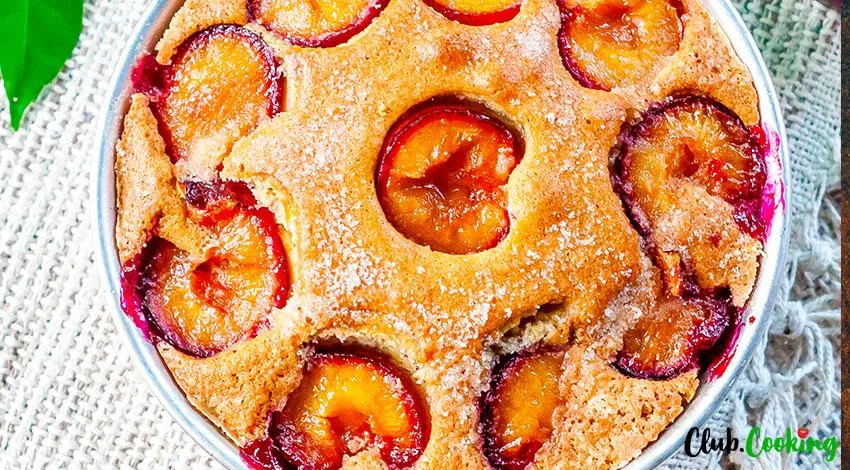
Plum cake, in this fresh-fruit sense, is a simple butter cake baked with plums on top. As the cake rises, the batter puffs up around the fruit, the plum juices turn jammy and the sugar sprinkled over the top forms a thin, lightly crisp crust. It is a late-summer and early-fall coffee cake rather than a frosted layer cake: one bowl of dry ingredients, one bowl of creamed butter and sugar, and no decoration beyond the fruit itself.
Ingredients for plum cake and what each one does
- Butter and sugar. A full cup of softened butter is creamed with 1 cup of sugar. This is a rich batter, closer to a pound cake than to a sponge, which is why it can carry juicy fruit without turning wet.
- Eggs. Three eggs, added one at a time, give structure and help the cake rise around the plums.
- Flour, baking powder and salt. Plain all-purpose flour with 1 teaspoon of baking powder gives a tight, tender crumb.
- Pumpkin pie spice. It is divided: 1/2 teaspoon goes into the dry ingredients and the remaining 1/4 teaspoon is sprinkled over the plums with 1 tablespoon of sugar.
- Plums. Six to eight, depending on size. They are not peeled.
Best plums for baking
Use ripe but still firm plums so the slices hold their shape. Dark red or purple plums give the prettiest color and a pleasant tartness. Italian prune plums are especially good because they are less juicy and do not make the cake soggy. Very soft, overripe plums release too much liquid and are better saved for jam. There is no need to peel them: halve, pit and cut each plum into eighths. The skins add color and a slight tartness that balances the sweet batter.
How to make plum cake: overview
The method has four short stages, and the whole cake is in the oven within 15 minutes.
- Prepare the pan. Heat the oven to 350°F (175°C). Line the bottom of a 9-inch round or springform pan with parchment paper and oil it so the cake releases easily.
- Mix the dry ingredients, including the first 1/2 teaspoon of spice.
- Cream, then combine. Beat the softened butter with the sugar until light and fluffy, add the eggs one at a time, then mix in the flour mixture just until no dry streaks remain.
- Top and bake. Spread the thick batter evenly, arrange the plum slices over it, sprinkle with the sugar and remaining spice, and bake for 55 minutes. Let it cool before serving.
Where plum cake goes wrong
- Cold butter. Butter that is too firm will not cream properly, and the cake bakes up dense. It should give easily when pressed but not look greasy or melted.
- Overmixing after the flour goes in. Stop as soon as the batter is smooth. Extra beating makes the crumb tough.
- Pressing the fruit in. Arrange the plums skin side down in circles on top of the batter and leave them there. They will sink slightly on their own as the cake rises. Pushed-in or very thick slices end up at the bottom.
- Cutting too soon. Let the cake cool at least 20 minutes before slicing so the fruit juices settle and the crumb firms up.
How to tell when plum cake is done
Start checking after 50 minutes. A toothpick inserted into the cake, not into a plum, should come out clean, the top should be golden brown and the edges should begin to pull away from the pan. The cake around the fruit stays a little moister than the rest, which is normal. If the top browns too fast before the center is set, cover it loosely with foil for the rest of the baking time.
Variations
- Spices: instead of pumpkin pie spice, use cinnamon with a pinch of nutmeg and ground ginger. One teaspoon of vanilla extract can be added to the batter with the eggs.
- Other fruit: apricots, peaches or pitted cherries work the same way.
- Crumb topping: rub together 1/3 cup flour, 3 tablespoons sugar and 3 tablespoons cold butter and scatter over the plums before baking.
- Tart plums: if your fruit is very sour, sprinkle an extra spoonful of sugar over the slices.
How to serve plum cake
Serve it barely warm or at room temperature with coffee or tea. A dusting of powdered sugar, softly whipped cream or a scoop of vanilla ice cream is all it needs. Because the method is so simple, it is also a good cake to make with kids: they can arrange the plum slices and sprinkle the sugar.
How to store plum cake
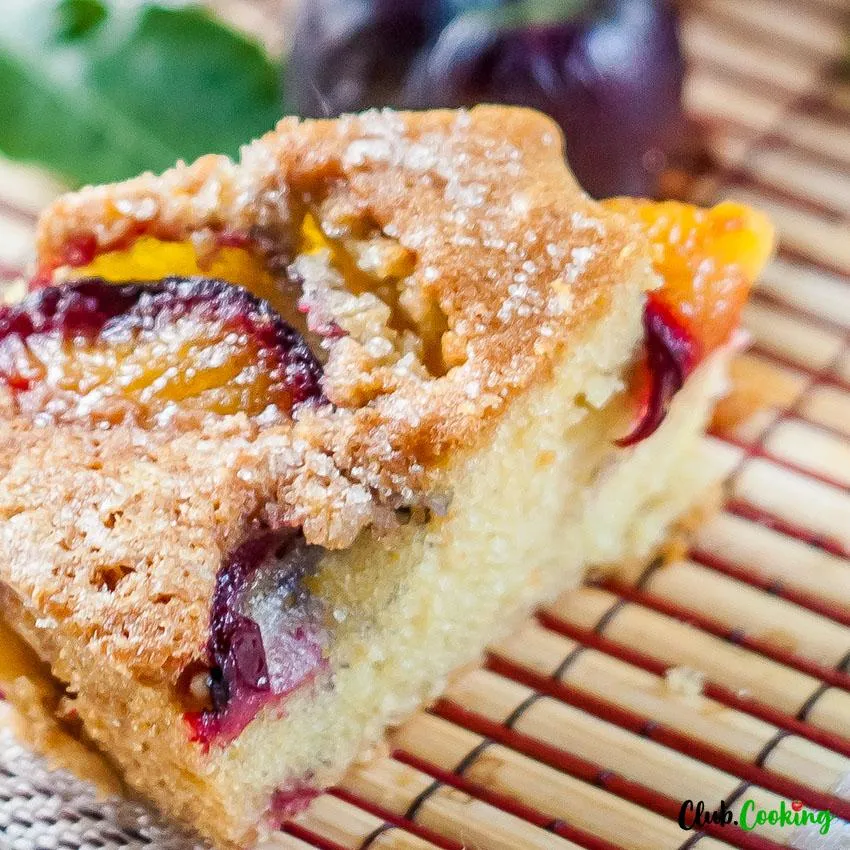
Cover and keep at room temperature for 1 day, then refrigerate for up to 4 days. The flavor is often better on the second day, once the plum juices have soaked a little into the crumb. Let chilled slices stand at room temperature for a few minutes before serving so the butter in the cake softens again. Plum cake also freezes well: wrap slices tightly and freeze for up to 3 months, then thaw at room temperature.
Related recipes: peach cobbler with cake mix, key lime cake.
Frequently Asked Questions
How do you make plum cake from scratch?
Cream 1 cup of softened butter with 1 cup of sugar, beat in 3 eggs, fold in the flour mixture, top with sliced plums and bake at 350°F (175°C) for 55 minutes. The active work takes about 15 minutes.
Do I need to peel plums for plum cake?
No. The skins soften in the oven, hold the slices together and give the top its deep color.
Can I use frozen plums?
Yes. Slice them while still partly frozen and do not thaw completely, or they will release too much juice. Add 5–10 minutes to the baking time.
Why did my plums sink?
Very juicy or thickly sliced plums are heavier and sink into the soft batter. Use firm plums and thinner slices, and arrange them on top rather than pressing them in.
What pan should I use for plum cake?
A 9-inch round cake pan or springform pan works best. Line the bottom with parchment and oil it, since the caramelized plum juices can stick at the edges.