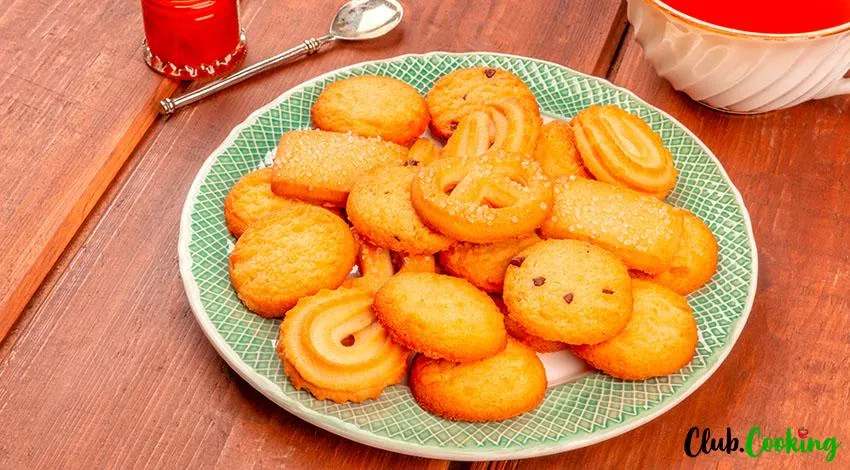
Danish butter cookies are crisp, tender piped cookies made from butter, sugar, egg, vanilla and flour, finished with a sprinkle of sugar. This Danish butter cookies recipe uses 1 cup of butter and 2 cups of flour, makes about 36 cookies, and bakes at 350°F (175°C) for 15 to 17 minutes per pan. Plan on about 30 minutes to mix and pipe, plus baking time for two pans.
What are Danish butter cookies?
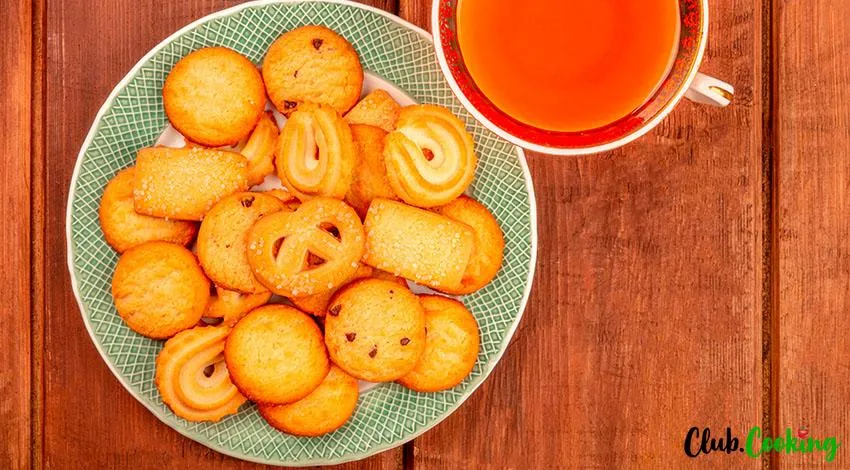
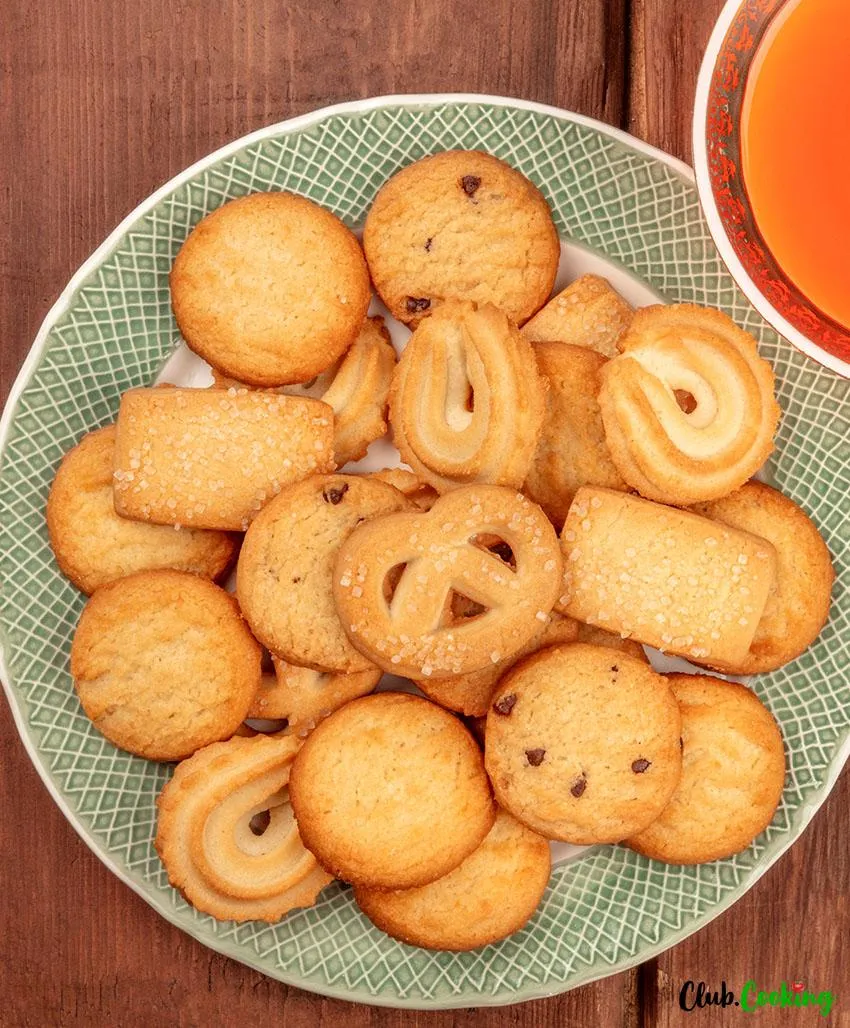
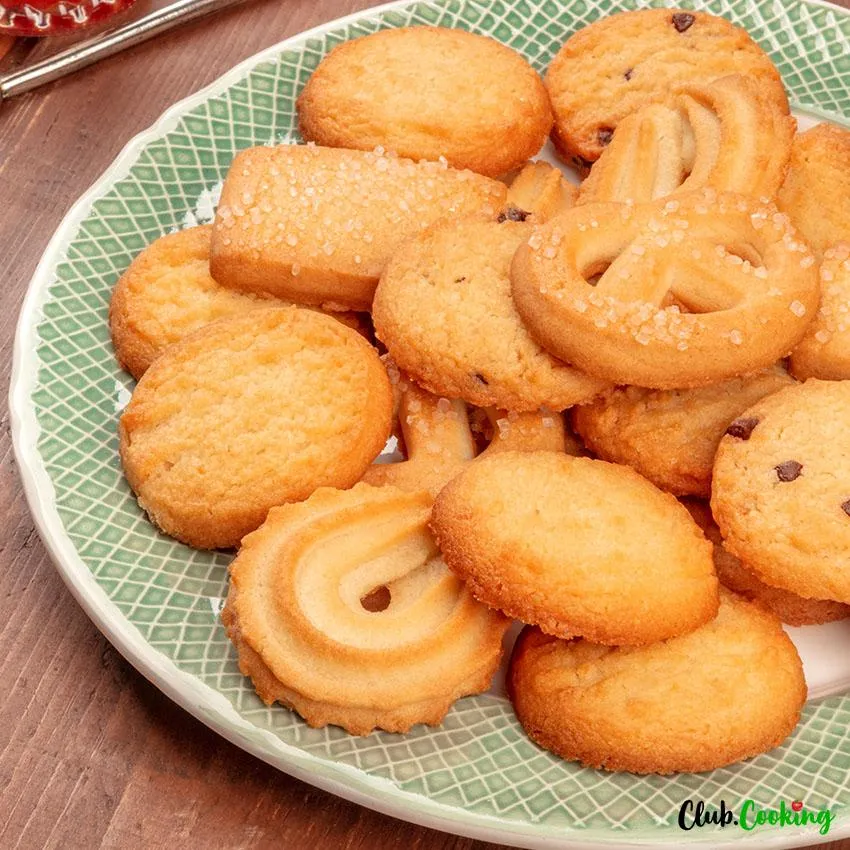
Danish butter cookies are rich, buttery cookies known for their swirled rings and rosettes, often sold in round blue tins around the holidays. The ring shape is the one known in Denmark as vaniljekranse, or vanilla wreaths. The dough is soft enough to pipe through a star tip, which gives the cookies their ridged shape, and bakes up crisp at the edges and tender in the middle.
They are closely related to spritz cookies, which use a similar dough pressed through a cookie press. Compared with shortbread, Danish cookies contain egg, which makes the dough pipeable and the baked cookie a little lighter.
Ingredients for this Danish cookies recipe and why they matter
Butter. One cup (2 sticks, about 225 g) of unsalted butter at room temperature. Butter is the main flavor here, so use a good-quality one. It should be soft enough to press easily but not greasy or melted.
Sugar. Half a cup of granulated sugar in the dough, plus extra for sprinkling on top for a little sparkle and crunch.
Egg. One egg binds the dough and keeps it soft enough to pipe. A cold egg can make creamed butter seize, so take it out of the refrigerator along with the butter.
Vanilla and salt. 1 1/2 teaspoons of vanilla extract and 1/4 teaspoon of salt. With so few ingredients, both are noticeable; the salt keeps the cookies from tasting flat.
Flour. Two cups of all-purpose flour. Spoon it into the cup and level it off; packed flour makes a stiff dough that is hard to pipe.
How to make Danish butter cookies: overview
The dough comes together in one bowl in a few minutes. The butter and sugar are beaten on medium speed for 1 to 2 minutes until creamy, the salt, vanilla and egg are beaten in for about 1 minute, and the flour is added gradually on low speed. The dough then goes into a decorating bag fitted with a large open star tip and is piped into 2-inch (5 cm) circles on parchment paper or silicone mats, sprinkled with sugar and baked one pan at a time.
There is no chilling step in the recipe, so the dough is piped while it is still soft. That is the point at which most problems start or are avoided.
Tips for piping Danish butter cookies
- Use a large open star tip. A small tip makes the dough very hard to pipe and can split the bag.
- Fill the bag only halfway. A smaller amount of dough is easier to squeeze and warms evenly in your hands.
- Use a sturdy bag. This dough is much firmer than frosting. Thin disposable bags may burst at the seam.
- Pipe evenly. Hold the bag upright, pipe a ring and finish by overlapping the starting point slightly. Keep the circles a similar size so they bake at the same rate, and leave a little space between them.
- Add flour on low speed. Mix just until combined. Overmixing develops gluten and makes the cookies tougher.
- Do not taste the raw dough. It contains raw egg and raw flour.
Baking time and doneness
Bake at 350°F (175°C) on the center rack, one pan at a time, until the cookies are light golden brown at the edges, 15 to 17 minutes. With two pans, that is a little over 30 minutes of oven time in total. The tops stay pale; if you wait for them to color, the bottoms will be too dark. Cool the cookies completely before moving them into a tin: they are fragile when hot and firm up and turn crisp as they cool.
Troubleshooting
- Dough too stiff to pipe: the butter was too cold or the flour was overmeasured. Let the dough sit for a few minutes to soften, or work the bag in your hands.
- Cookies spread and lose their ridges: the butter was too soft or the kitchen is warm. Chill the piped cookies on the pan for 10 to 15 minutes before baking.
- Tough or hard cookies: the dough was mixed too long after the flour went in, or the cookies were overbaked.
- Uneven browning: the cookies were piped in different sizes. Rotating the pan halfway through baking also helps.
Variations
Add a little almond extract alongside the vanilla, or dip the cooled cookies halfway in melted chocolate. Coarse sanding sugar on top gives more crunch than granulated sugar. The same dough can be piped as rosettes, short S shapes or straight fingers; keep the pieces similar in size and watch the baking time. For a citrus option, try these lemon shortbread cookies, and for a full holiday tray add some Italian Christmas cookies.
Storage, freezing and gifting
Store the cooled cookies in an airtight tin or container at room temperature for up to about a week. They also freeze well for up to 3 months; thaw them at room temperature in the container. Because they are sturdy once cooled and keep for days, they suit cookie tins and holiday gift boxes. Layer them with parchment so the sugar tops do not rub off.
Frequently Asked Questions
What ingredients are in Danish butter cookies?
Danish butter cookies are made from butter, granulated sugar, salt, vanilla extract, egg and all-purpose flour. This recipe uses 1 cup of butter, 1/2 cup of sugar, 1 egg and 2 cups of flour for about 36 cookies.
Why is my butter cookie dough too stiff to pipe?
The butter was likely too cold or the flour was overmeasured. Let the dough sit for a few minutes to soften, and use a large open star tip.
Can I make Danish butter cookies without a piping bag?
Yes. Roll the dough into small balls and flatten them with a fork or the bottom of a glass. They will taste the same but lose the swirled look.
How do I keep butter cookies from spreading?
Make sure the butter is soft but not melted, and if the kitchen is warm, chill the piped cookies on the pan for 10 to 15 minutes before baking.
How long do Danish butter cookies last?
They keep for up to about a week in an airtight tin at room temperature, or up to 3 months in the freezer.
What is the difference between Danish butter cookies and spritz cookies?
The doughs are very similar; the main difference is shaping. Danish butter cookies are piped from a bag through a star tip, while spritz cookies are pressed through a cookie press.