
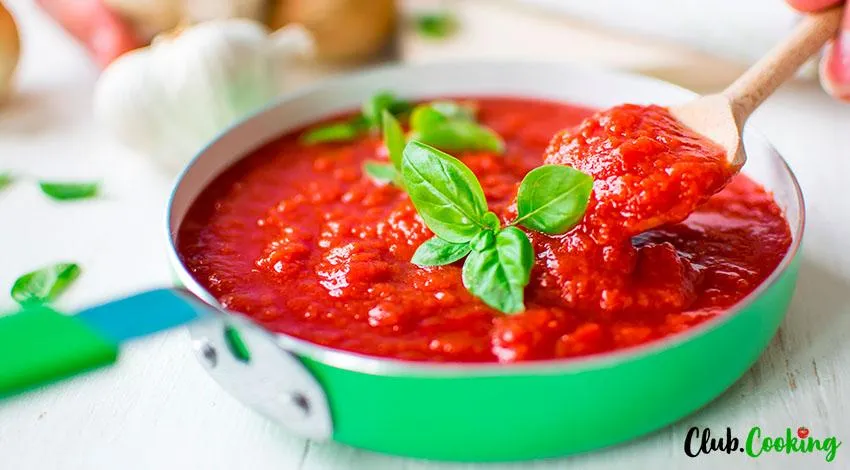
For 1 tablespoon of tomato paste in a cooked sauce, start with about 3 tablespoons of plain tomato sauce and reduce it until concentrated. Tomato purée also works if you cook off excess water. Taste before adding salt, especially if the replacement is seasoned.
Match concentration, not just red color
Tomato paste supplies concentrated tomato solids with relatively little water. A thinner product adds liquid as well as flavor. Replacing a tablespoon of paste with a tablespoon of watery sauce may leave the dish weak, while adding several uncounted tablespoons can thin it.
Identify whether the paste is a small flavor addition, a sauce base, or part of a browning stage. A soup can tolerate different liquid adjustments from a dry meat filling. Make the replacement before judging the final salt and acidity.
Reduced tomato sauce
Use a plain product when possible and simmer gently in a small pan, stirring to prevent scorching. The rough three-to-one starting volume is a planning aid, not a promise that every sauce loses exactly the same amount of water.
Stop when it provides the concentration suited to the recipe. Taste before adding salt or sugar because reduction concentrates any seasonings already in the product. Do not leave a small pan unattended; a thin layer can move quickly from reduced to burnt.
Purée or passata
Product names differ among markets, so inspect the consistency and ingredients. Some purées are much thicker than others. Reduce as needed rather than assuming the label proves a fixed concentration.
If the recipe browns tomato paste in oil, a wet purée will behave differently at that stage. Reduce first or choose a method developed for the thinner product. Adding a watery replacement directly can cool the pan and change the intended browning.
Crushed tomatoes
Crushed tomatoes can suit a rustic soup or sauce where some texture is acceptable. Simmer to reduce water and blend if a smoother result is needed, handling hot liquids safely.
Seeds, skins, and seasoning vary. A small paste substitution in a smooth sauce may be more work than choosing a different recipe. Do not add an entire large can merely because the original used a spoonful of paste unless the complete dish is being reformulated.
Fresh tomatoes
Fresh tomatoes can be cooked into a concentrated base, but water content and variety vary substantially. Use a complete method with appropriate simmering and handling rather than one universal tomato-count conversion.
This is a cooking project, not necessarily a quick rescue during a fast skillet dish. Prepare the base before the stage where paste is needed. Ordinary reduction here does not create a shelf-stable preserve; refrigerate or freeze appropriately afterward.
Sun-dried tomato paste
A prepared sun-dried tomato paste can add intensity in some savory dishes. Begin with less because salt, oil, herbs, and garlic may already be included. Its flavor is not identical to plain concentrated tomato paste.
Read the label and account for allergens or other dietary requirements. A strongly seasoned spread may work in one sauce and overwhelm a delicate soup. Keep product-specific storage after opening rather than assuming every jar behaves like a plain canned tomato ingredient.
Ketchup, only where appropriate
Ketchup contains sweetness and acidity in addition to tomato. A small amount can fit a pantry sauce or meat mixture whose flavor already tolerates those roles. It is not the first choice for an unsweetened tomato base.
Do not replace a large paste quantity with ketchup and retain all original sugar and vinegar automatically. Taste a safe sauce or cook a small meat test portion instead of sampling raw ground meat. A different flavor can be acceptable without being described as identical.
Making sauce from tomato paste
Whisk a little warm water into the paste until smooth, then add more until the mixture pours. Simmer briefly with any herbs the dish calls for and adjust salt after tasting. Use this only when the recipe needs tomato sauce. If the recipe needs paste, reduce plain sauce separately so it becomes thick enough to coat a spoon without changing the dish’s liquid balance. For recipe examples, see tomato paste sauce, Indian tomato soup, tomato and onion salad.
Substitutes to avoid
Avoid adding several spoonfuls of thin tomato sauce to a dish that has no time to reduce. Cook the substitute separately or reduce another liquid in the recipe. Ketchup adds sugar, vinegar, and seasonings, so reserve it for small amounts in dishes that can take the sweeter flavor.
Storage and freezing
After opening, follow the package’s refrigeration directions and use clean utensils. Transfer leftovers to a suitable covered container if needed. Freezing small measured portions can reduce waste and make later recipe amounts easier to use.
Freeze on a suitable lined tray or in an appropriate portion container, then pack airtight and label the amount and date. Thaw safely or add a small frozen portion directly only when the complete cooking method can heat it appropriately. Freezing does not rescue paste that already shows spoilage or had poor handling.
FAQ
How to make tomato sauce from tomato paste?
Whisk warm water into tomato paste a little at a time until it reaches a pourable sauce consistency. Simmer with the seasonings you want and taste before salting. A paste with added salt or herbs may need less seasoning.
Use the thickness the finished recipe calls for.
How to store tomato paste?
Transfer leftover paste to a clean covered container, refrigerate it, and follow the package storage instructions. If you will not use it soon, portion and freeze it. Avoid leaving the paste on the counter while preparing the rest of the dish.
Can you freeze tomato paste?
Yes. Freeze it in tablespoon portions or use a small covered tray until firm, then transfer the portions to an airtight container. Label the date. Add a portion to a simmering sauce or thaw it in the refrigerator for more precise measuring.
What is the closest substitute in flavor?
Plain tomato sauce or passata reduced until thick is usually closest. Choose a product without strong seasonings so you can control the flavor. Sun-dried tomato paste is more concentrated in its own way and gives a different flavor, so add it gradually.
What can I use if I have none of these on hand?
If you have fresh or canned tomatoes, cook a small portion separately until thick and use it to taste. If there are no tomatoes, omit the paste only when it is a minor seasoning. In a tomato-based dish, choose a different recipe rather than substituting a strongly flavored condiment.