
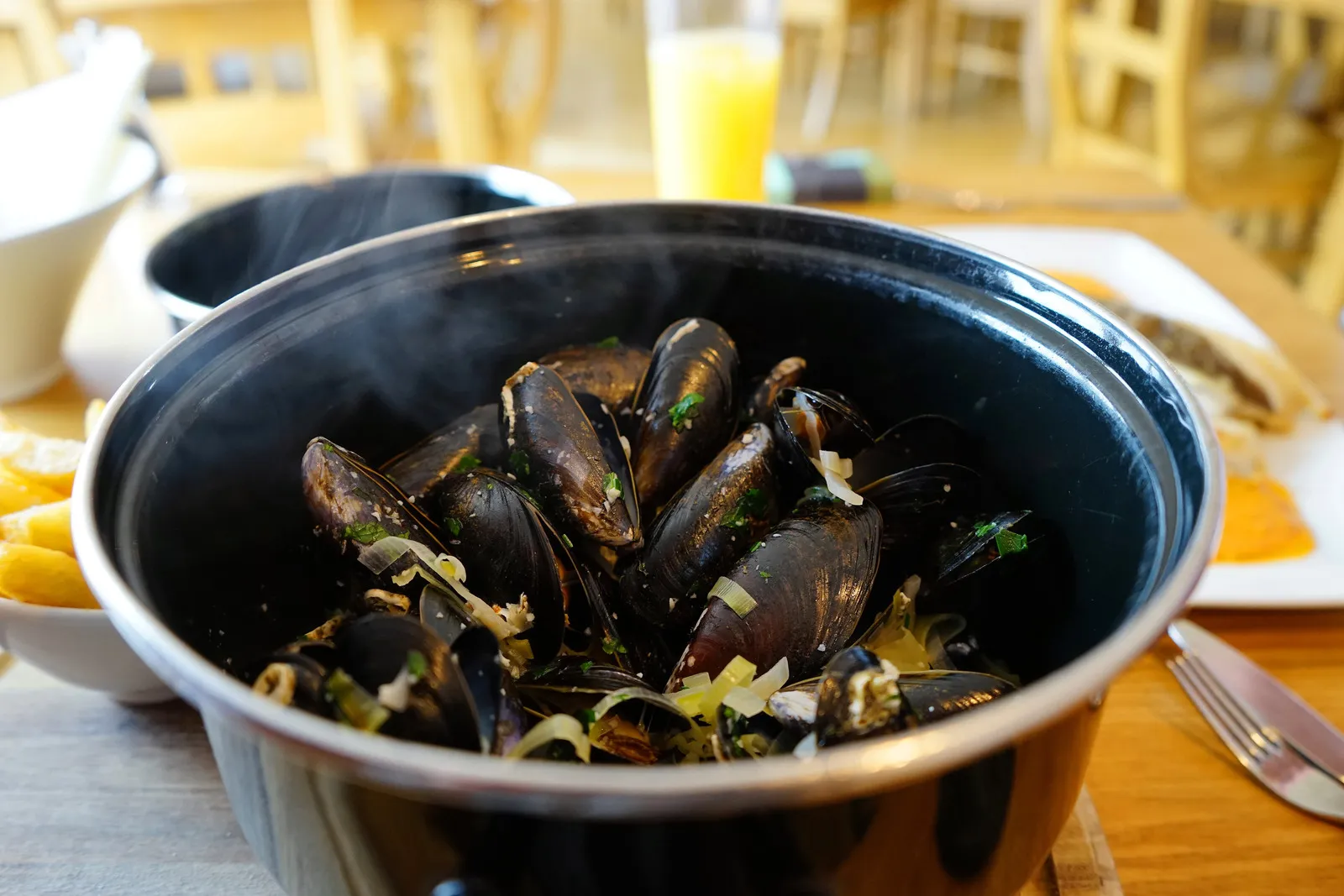
Start checking live mussels after about 4–5 minutes in a covered pot with steadily simmering liquid. Smaller batches can open sooner. Cook until the shells open and discard those that stay closed. The timing differs for frozen or already cooked mussels, so check the package before choosing a method.
Identify the starting product
Live mussels, frozen raw mussels, and pre-cooked vacuum-packed mussels need different instructions. Read the label before selecting a method. A pre-cooked product is not inspected for life in the same way as fresh live shellfish, and a live-shell timetable does not automatically apply to shelled frozen meat.
Buy from a reputable approved source and keep cold. Cooking is not a substitute for safe sourcing or proper storage. Do not use a normal-looking shell as proof that shellfish collected from an unapproved area are suitable to eat.
These guidelines assume the stated product and method. Pot loading and heat recovery matter. A cold crowded pot that has not returned to an appropriate cooking state is not equivalent to shellfish added to an already steaming setup.
Inspect live mussels before cooking
Keep live mussels chilled until you are ready to cook. Rinse them under cool running water, scrub off grit, and pull away any visible beard. Discard cracked shells and mussels that stay open when tapped. Clean only what you plan to cook and avoid leaving them submerged in fresh water. Use a separate clean bowl for the cooked batch.
How to steam mussels at home
Bring a shallow layer of broth or water to a lively simmer in a wide pot. Add the mussels and cover. Start checking at about 4–5 minutes and shake the covered pot gently if the shells are crowded. Lift out opened shells with tongs so they do not keep cooking while the rest finish. Discard any that remain closed at the end. If you plan to serve the cooking liquid, strain it through a fine sieve to catch grit.
How to boil mussels
Bring the cooking water to a proper boil before adding the intended small batch. Follow the complete method and allow heat to recover. CDC guidance continues boiling for 3–5 minutes after the shells open.
Do not assume the first open shell means every mussel in a large crowded pot has received the same treatment. Batch size and heat distribution affect the process. Use a pot suited to the quantity and avoid a deep mass that heats unevenly.
Drain and serve according to the recipe, discarding unopened shells. If making a sauce from the cooking liquid, handle it as cooked seafood broth and keep it at safe temperatures. A sauce reduction stage should be planned rather than leaving cooked shellfish standing while it happens.
Mussels in a seafood boil
A seafood boil contains ingredients with different cooking needs. Potatoes, corn, raw shrimp, live mussels, and cooked sausage cannot all be assumed to finish after the same interval. Use a staged method that identifies each product’s starting state.
Add mussels where the recipe can provide their complete cooking process. Do not drop them into broth at the last instant and serve as soon as one opens. Other ingredients being cooked does not establish the shellfish have received sufficient heat.
If the pot is too crowded to maintain its intended boil, use batches or a larger appropriate setup. Meal planning should accommodate safe cooking rather than treating extra volume as a reason to skip time after heat recovery.
Mussels in hot pot
At-table cooking needs the same care as kitchen cooking. Keep raw shellfish cold until used and add manageable batches to actively heated broth. Separate raw-handling utensils from serving chopsticks or spoons.
Broth can cool substantially when several diners add cold ingredients together. Restore the cooking environment before treating a method’s minutes as meaningful. Do not use a barely warm communal pot as though it were an already boiling saucepan.
Follow the complete shellfish method, not just shell opening, and remove discarded shells appropriately. Keep cross-contact between raw seafood and ready-to-eat garnishes controlled throughout the meal.
Pre-cooked and frozen mussels
A pre-cooked mussels recipe should follow the package’s thawing and heating guidance. Some products are intended to cook from frozen, while others need refrigerator thawing. Read the label instead of assuming every sealed bag is fully cooked or ready to eat cold.
For cooked leftovers, reheat to 165°F (74°C). Repeated heating can make mussel meat firmer, so prepare manageable portions. Freezing or packaging does not make poor temperature handling irrelevant.
Shell-opening tests designed for live mussels are not proof of safety for an unidentified frozen product. Product state, storage, and instructions provide the relevant starting information.
How to tell mussels are done
The shells should open during cooking. Check several from different parts of the pot, since a crowded batch can heat unevenly. Use tongs and keep your face away when lifting the lid. Discard unopened shells rather than prying them apart. An open shell before cooking is different. Tap it before it goes in the pot and discard it if it does not close.
Common mistakes
- Confusing live and fully cooked packaged products.
- Using cracked shells or nonresponsive live mussels.
- Overcrowding until the pot loses its intended heat.
- Stopping at the first opened shell and omitting the rest of the method.
- Mixing raw and serving utensils in hot pot.
- Serving shells that remain closed after cooking.
Storage and reheating
Refrigerate cooked leftovers promptly in shallow containers at 40°F (4°C) or below and use within 3–4 days, respecting any shorter product limits. Reheat to 165°F (74°C). Store broth safely with appropriate portions rather than leaving the cooking pot at room temperature for hours. Freeze suitable cooked portions if desired, accepting texture changes.
Related recipes and guides
Serve mussels with garlic bread for dipping. If you are planning a seafood spread, the scallop timing guide covers timing for scallops and shrimp and grits offers a heartier shrimp option.
FAQ
How long to cook mussels in seafood boil?
Add live mussels near the end of a seafood boil and start checking after a few minutes. Remove those that open and discard shells that stay closed. Cook potatoes or other slow ingredients first so the mussels do not sit in the pot while the rest of the meal finishes.
How long to cook mussels in hot pot?
Keep the broth simmering and add a small batch of cleaned live mussels. Remove them as their shells open and discard those that stay closed. Large batches cool the broth, so let it return to a simmer before adding more. Keep utensils that touched raw seafood away from cooked portions.
How to cook mussels at home?
Rinse and inspect live mussels, then steam them in a covered pot over a shallow layer of simmering broth. Start checking after about 4–5 minutes. Lift out opened shells and discard those still closed at the end. Strain the broth if you want to serve it with the mussels.
How long to cook mussels in boiling water?
Start checking after a few minutes once the liquid is simmering again. The shell opening is more useful than a single timer, especially if the mussels are different sizes. A shallow covered steam uses less liquid and keeps more flavor in the broth. Discard any shells that stay closed.
How do I know when it is done?
The shells should open during cooking. Lift out opened mussels promptly and discard any that remain closed after cooking. If the mussels were already cooked and sold frozen, use the package directions instead of waiting for the same opening cue. Reheat cooked leftovers to 165°F (74°C).
Photo: Ben Brown / Wikimedia Commons, CC BY 2.0, cropped.