
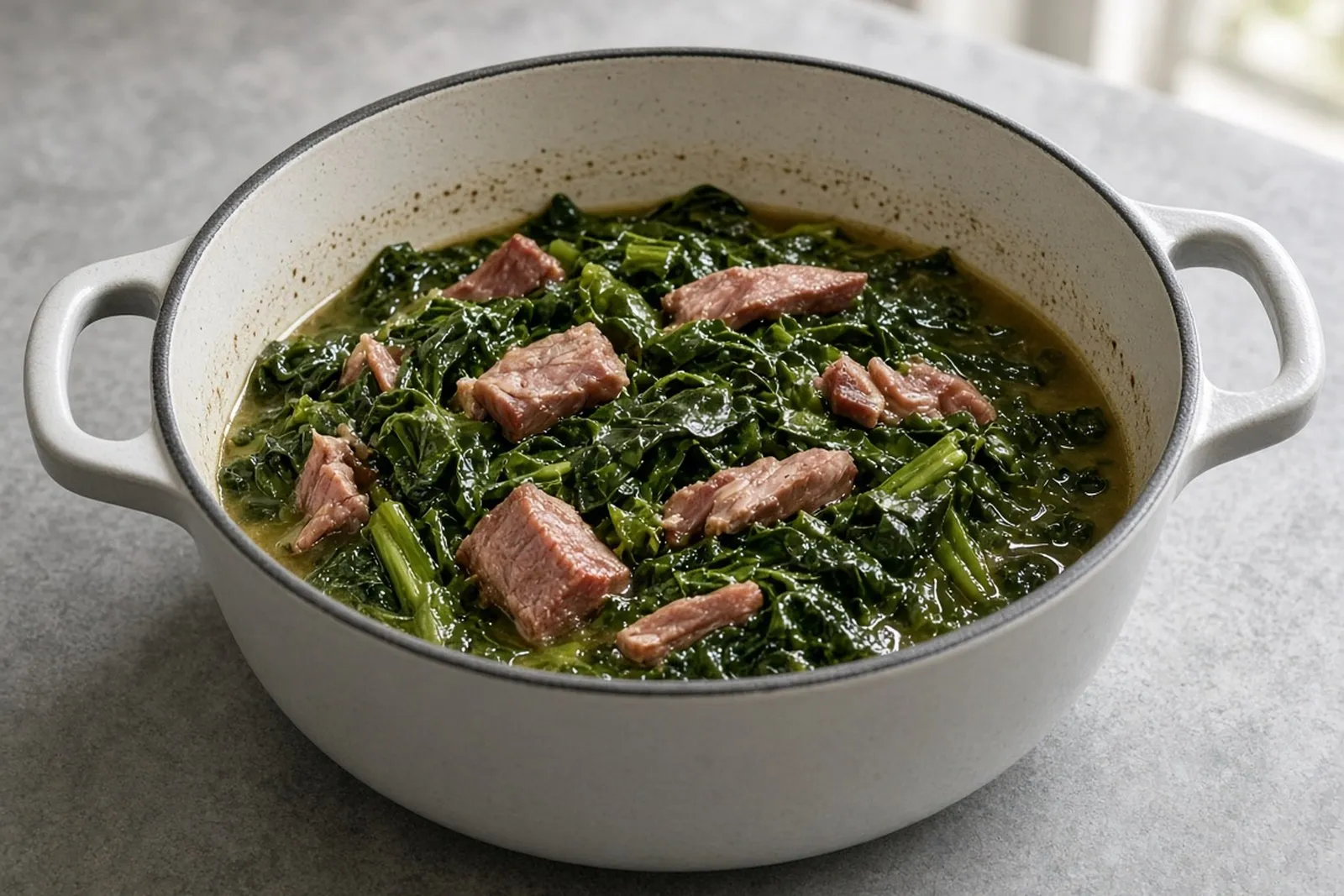
How to cook mustard greens is mostly a question of bitterness. A quick sauté takes 8–12 minutes and stays sharp. A boil of 15–20 minutes softens the bite. A Southern braise, covered and simmered 45–60 minutes with smoked meat, turns the leaves mild and silky. Two pounds (900 g) of raw greens serve 4.
Mustard Greens Cooking Times
| Method | Heat | Time | Done when |
|---|---|---|---|
| Southern braise | Low simmer, covered | 45–60 minutes | Leaves silky, pot liquor savory |
| Sauté | Medium | 8–12 minutes | Wilted, still a little sharp |
| Boil | Rolling boil | 15–20 minutes | Tender, bitterness eased |
| Steam | Steady simmer | 8–12 minutes | Tender with some bite left |
How to Prep Mustard Greens
Look for deep green leaves without yellow patches or slimy stems. Mustard greens are often sandy. Fill a clean sink or a large bowl with cold water, push the leaves under, and lift them out. Repeat until the water is clear.
Cut off thick, dried stem ends. You can leave tender ribs in. Stack the leaves and cut them into 1-inch (2.5 cm) strips. Two pounds (900 g) looks like a mountain and cooks down to about 4 cups. Do not reduce the amount because the raw pile seems too big.
Young leaves are milder than large, mature ones. If the bunch smells very sharp even when raw, plan on the braise or the boil, not a 5-minute sauté.
How to Braise Mustard Greens Step by Step
This is the main method for 4 servings.
- Wash and cut 2 lb (900 g) mustard greens.
- Put 6 oz (170 g) smoked ham hock or diced ham, 1 small onion, chopped, and 4 cups (960 ml) water into a 6-quart (5.7 L) pot. Bring to a simmer over medium heat.
- Add the greens in handfuls, letting each handful wilt before you add the next. Stir in 1/2 teaspoon table salt (3 g).
- Cover, lower the heat, and simmer 45–60 minutes, until the leaves are silky and a rib is tender. Stir once or twice so the top leaves sink into the liquid.
- Taste the pot liquor. Add salt if it is flat. Add 1 teaspoon (5 ml) apple cider vinegar if you want a cleaner finish. Serve the greens with some of the liquid.
A ham hock is already cooked. You are heating it to flavor the pot, not to cook it from raw. If you use raw smoked turkey instead, cook until the meat reaches 165°F (74°C).
How to Sauté Mustard Greens
Heat 2 tablespoons (30 ml) oil in a 12-inch (30 cm) skillet over medium heat. Cook 2 sliced garlic cloves for 30 seconds. Add 1 lb (450 g) chopped greens and 1/4 teaspoon salt (1.5 g). Toss for 8–12 minutes, adding 2 tablespoons (30 ml) water if the pan dries out, until the leaves are wilted and a thick rib is tender. This batch is half the braise amount because a skillet cannot hold 2 lb (900 g) at once. The flavor stays sharper than a long braise. Finish with 1 teaspoon (5 ml) vinegar.
How to Boil Mustard Greens
Bring 4 quarts (3.8 L) of water and 1 tablespoon salt (18 g) to a boil. Add 1 lb (450 g) chopped greens and boil 15–20 minutes, until tender and less bitter. Drain well. Save 1/2 cup (120 ml) of the cooking water if you want to moisten the greens later. Boiling pulls some of the sharp flavor into the water, which you pour off. That is why this method tames bitterness faster than a dry sauté.
How to Steam Mustard Greens
Steam 1 lb (450 g) chopped greens over 1 inch (2.5 cm) of simmering water for 8–12 minutes, until tender. Steaming keeps more of the sharp taste than boiling does. Use it when you want that bite, then season with salt and 1 teaspoon (5 ml) vinegar.
How to Tell Mustard Greens Are Done
A braised leaf should fold over a spoon with no tough rib. Sautéed leaves should be wilted and chewable, with a clean sharp taste, not a raw burn. If the pot tastes harshly bitter at 45 minutes, keep simmering. Another 15 minutes and a teaspoon of vinegar usually settle it. Black edges mean the sauté pan was too hot.
Seasoning and Serving Ideas
- Pot liquor: serve the braise in a bowl with the cooking liquid and a piece of cornbread.
- Vinegar at the table: cider or hot pepper vinegar, 1 teaspoon (5 ml) per serving.
- Onion and garlic sauté: the skillet method, with an extra sliced garlic clove.
- Beans: stir 1 cup (170 g) cooked black-eyed peas into the braise for the last 10 minutes.
- Pepper: 1/4 teaspoon red pepper flakes with the garlic in the sauté.
Common Mistakes
- A single rinse. Sand hides in the leaf folds. Wash until the water is clear.
- Sautéing mature greens and expecting them to taste like a long braise. Give them the full 45–60 minutes if you want them mild.
- Adding a lot of sugar to hide bitterness. Salt, time, smoked meat, and a little vinegar do that work.
- Cooking 2 lb (900 g) in one skillet. Use the pot, or sauté in two batches.
Storage
Keep unwashed greens in the refrigerator and cook them within 4 days. Cooked greens, with their liquid, keep 3–4 days at 40°F (4°C). Reheat to 165°F (74°C). They freeze for 2–3 months in the pot liquor. Thaw in the refrigerator and reheat in a pot. The leaves will be softer, which is already the point of the braise.
Related guides: How to Cook Turnip Greens, How to Cook Collard Greens: Times and Tenderness, How to Cook Cabbage, How to Cook Bok Choy.
Frequently Asked Questions
How long does it take to cook mustard greens?
A Southern braise takes 45–60 minutes. A sauté takes 8–12 minutes. Boiling takes 15–20 minutes, and steaming takes 8–12 minutes.
How do you make mustard greens less bitter?
Simmer them 45–60 minutes with smoked ham, salt the pot, and finish with 1 teaspoon (5 ml) vinegar. Boiling 15–20 minutes and draining the water also pulls bitterness out.
Can you cook mustard greens without meat?
Yes. Use the same water, onion, salt, and time in the braise. Add 1/2 teaspoon smoked paprika (1 g) if you want a smoky note without meat.
Are mustard greens and turnip greens cooked the same way?
The pot method is similar. Mustard greens taste sharper, so they often need the full hour. Turnip greens are a little milder and can be done closer to 45 minutes.
Why are my mustard greens still tough?
The ribs need time in liquid. If the leaves are soft and the ribs are not, keep the pot at a low simmer and check again in 10 minutes. A dry skillet will not finish thick ribs.