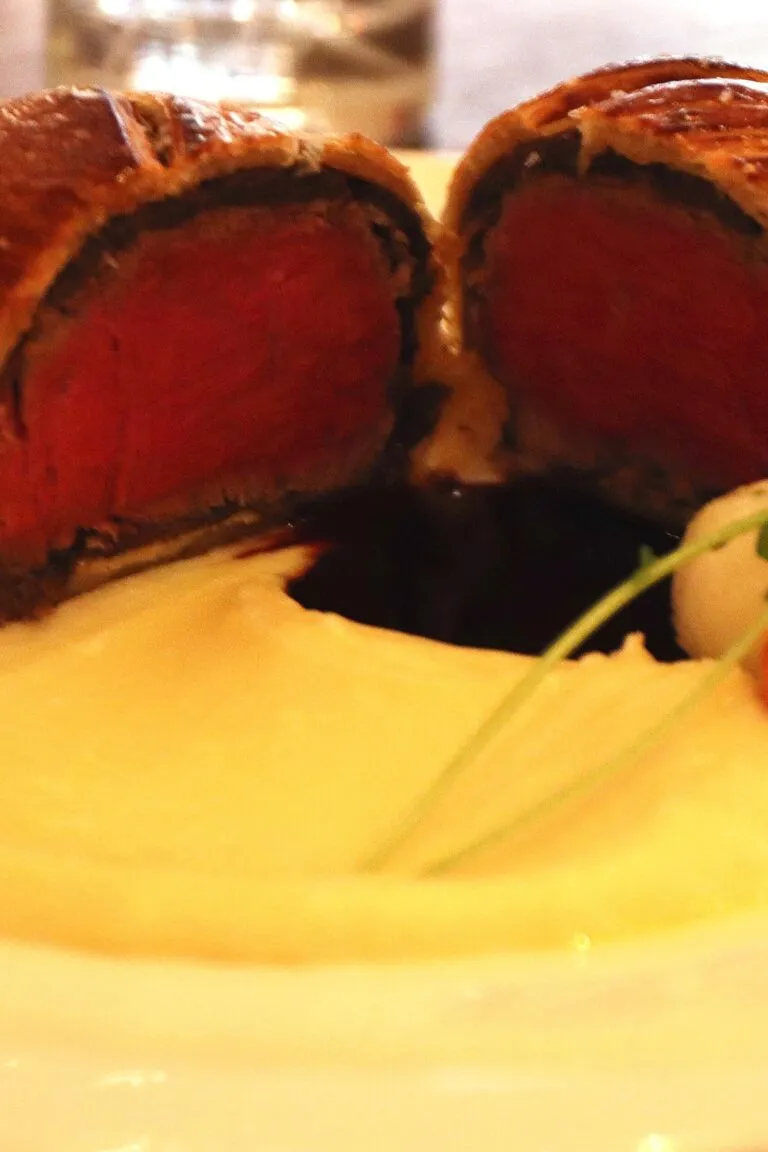

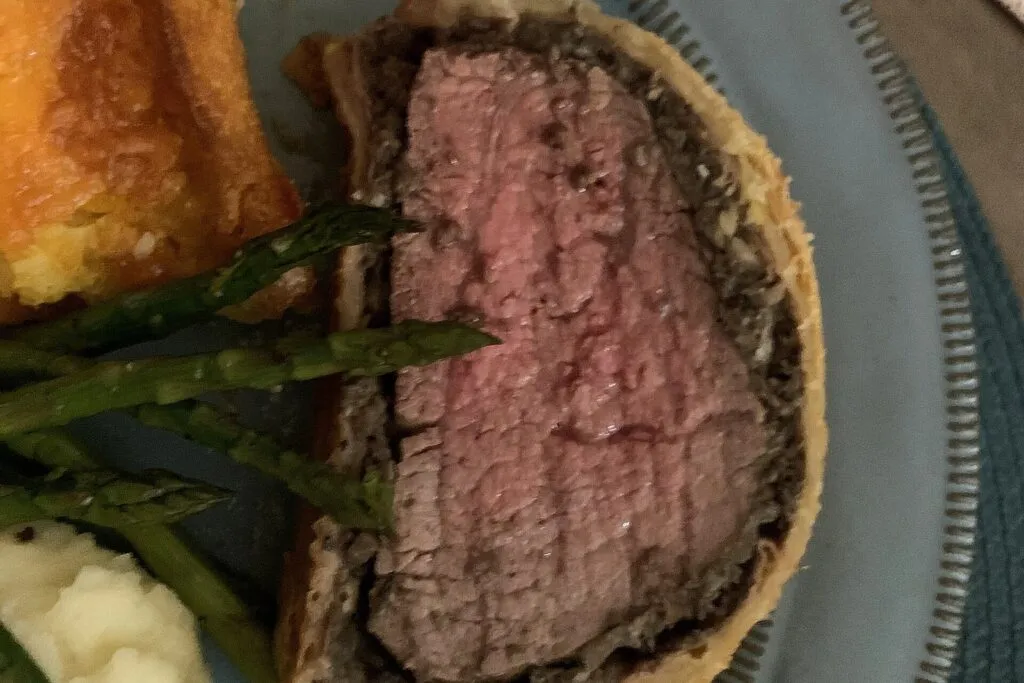
This beef Wellington recipe makes the stages easier to follow by separating searing, mushroom cooking, chilling, wrapping, and baking. Allow about two and a half hours, including chilling, and use a thermometer rather than relying on pastry color. The beef is wrapped with a dry mushroom mixture and prosciutto before puff pastry is added. Moisture control is essential: wet mushrooms soften pastry from the inside. This version follows the US safe minimum of 145°F (63°C) for whole beef with at least a three-minute rest, so its center is more cooked than many rare Wellington photographs show.
Servings: 4–6. Chilling: approximately 45–60 minutes.
Ingredient notes
Pastry sheet dimensions vary. Choose enough to enclose the actual tenderloin with a modest overlap rather than multiple thick folds. A probe or suitable thermometer is important, since a large pastry package hides the beef. Check all wrapping materials and remove any non-edible film before baking.
Tips for the best beef Wellington
Cook the mushrooms until dry. Draw a spatula across the skillet. If liquid runs into the space, keep cooking. Spread the finished mixture on a tray so it cools before touching the pastry.
Have everything ready before searing. Cool the mushroom mixture and lay out the prosciutto and pastry while the beef is still refrigerated. Once the beef is seared, wrap it and bake promptly. Prepare the components separately if you want to work ahead.
Check pastry and beef separately. A golden exterior says little about the temperature inside. Insert the thermometer into the center of the tenderloin, avoiding the outer layers. If the pastry is darkening too fast, tent it loosely with foil.
Trim excess pastry from the seam. Overlapping layers can stay gummy while the exposed pastry browns. Seal with a thin overlap and place the seam underneath. Brush the top with egg without letting it collect around the base.
Variations
Without mushrooms
Use a thin layer of well-drained sautéed spinach or another dry filling. Squeeze out moisture and cool it before assembly. The flavor will differ from classic mushroom duxelles.
Individual Wellingtons
Use evenly sized pieces and wrap them separately. Start checking earlier than for a whole roast and cook each center to 145°F (63°C), followed by a 3-minute rest.
Without prosciutto
Use a thin cooked crêpe as a barrier between the mushrooms and pastry. Pat it dry and avoid a thick overlap. The filling still needs to be dry, since the barrier can only absorb so much moisture.
What to serve with beef Wellington
Serve with green beans, asparagus, potatoes, or a sharp salad. For other beef dinners, try beef ragù or beef enchilada casserole. For a different cut and method, see the guide to cooking corned beef.
Storage and reheating
Refrigerate cooked portions within 2 hours, or within 1 hour above 90°F (32°C). Keep at 40°F (4°C) or below and use within 3–4 days. Reheat to 165°F (74°C), preferably on a rack in the oven so moisture does not collect under the pastry.
FAQ
Can I make beef Wellington ahead of time?
Prepare the mushroom mixture ahead and chill it. Thaw the pastry as directed and keep the raw beef refrigerated until you are ready to cook. Once you sear the tenderloin, assemble and bake promptly. Avoid refrigerating partially cooked beef to finish later. The finished Wellington can be chilled and reheated.
How long does beef Wellington keep in the fridge, and can it be frozen?
Use refrigerated cooked Wellington within 3–4 days. Freeze promptly cooled portions if needed, although the pastry may soften. Thaw in the refrigerator and reheat to 165°F (74°C). Use a rack and leave room around the slices so the oven can dry the pastry as the center heats.
What can I substitute if I don’t have a key ingredient?
Use another evenly shaped piece of tenderloin if the center-cut roast is unavailable. Cremini or white button mushrooms both work. A thin cooked crêpe can replace the prosciutto as a moisture barrier. Use puff pastry rather than pie dough if you want the light, flaky exterior associated with Wellington.
Photos: cyclonebill / Wikimedia Commons, CC BY-SA 2.0; Wheeler Cowperthwaite / Wikimedia Commons, CC BY 2.0; Prayitno / Wikimedia Commons, CC BY 2.0, cropped.