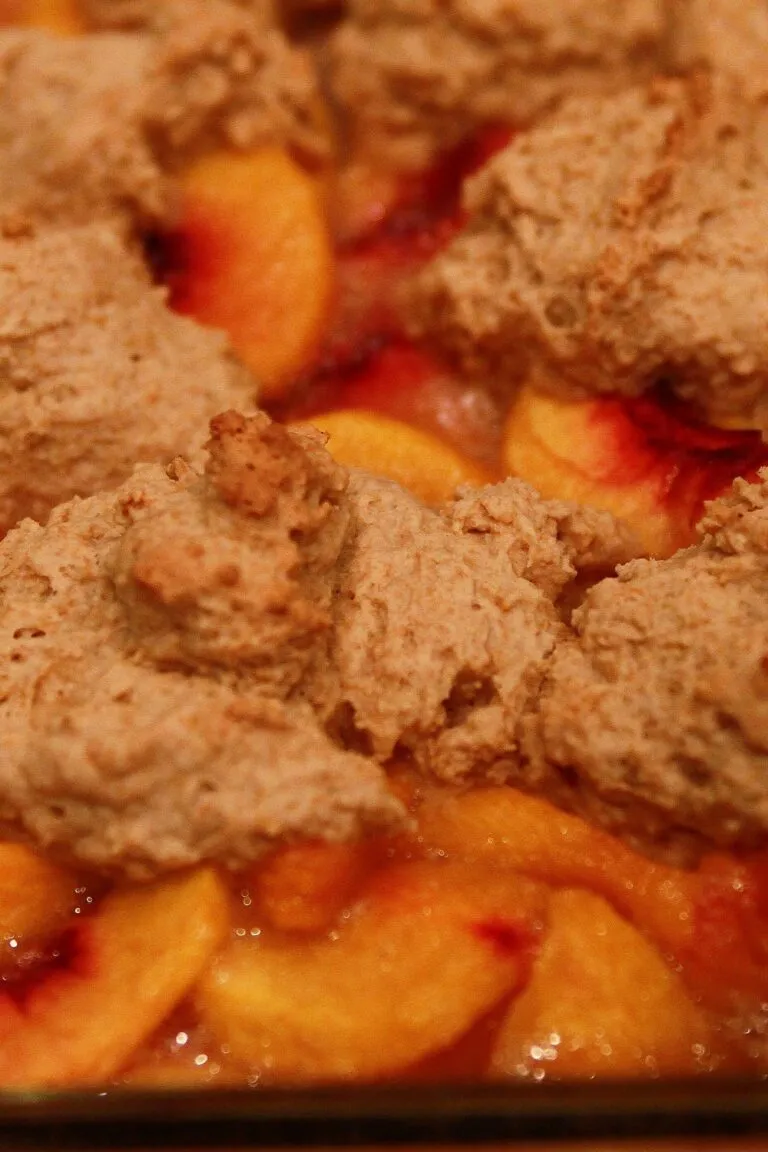
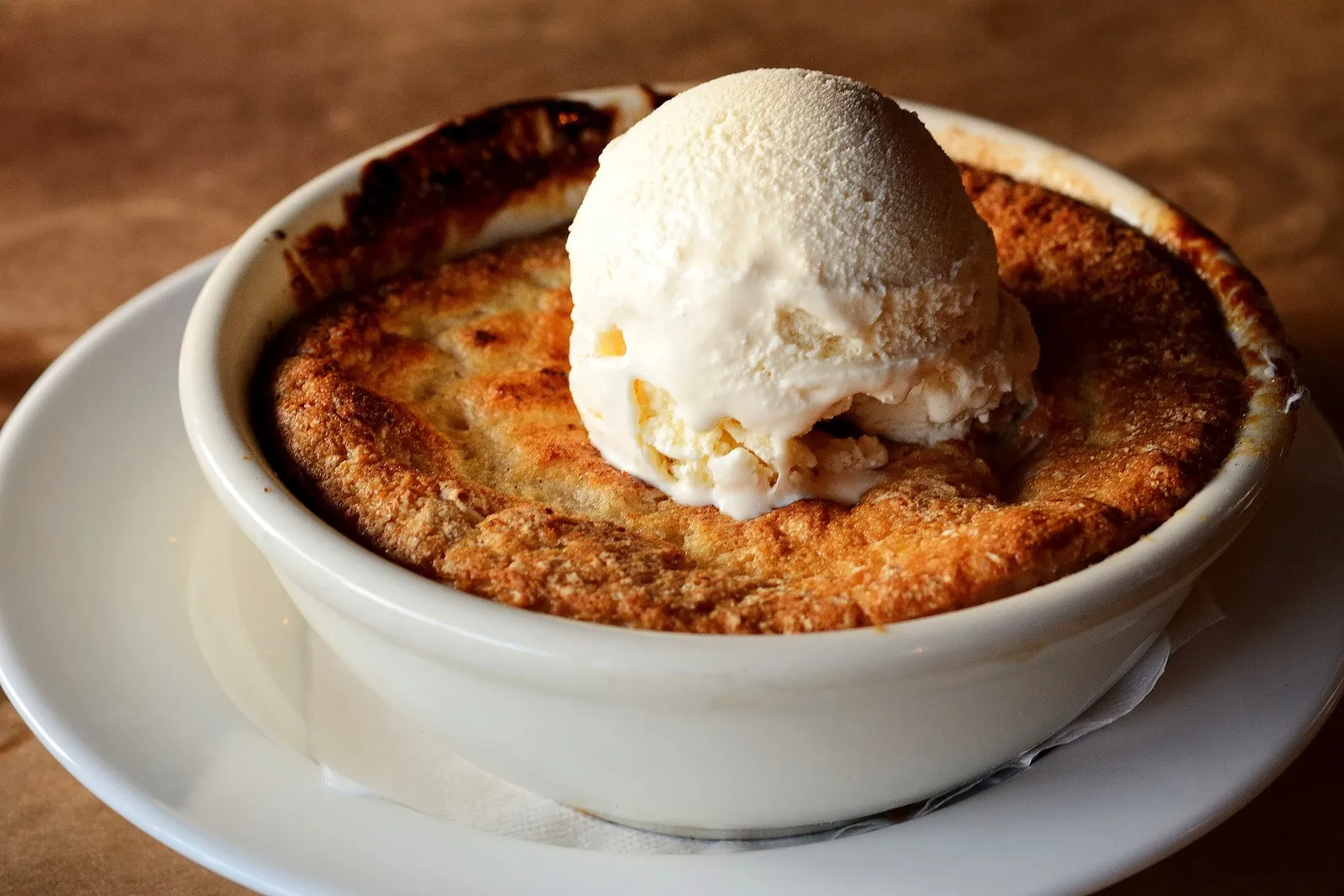
This peach cobbler recipe is easy to assemble with fresh sliced peaches and a homemade biscuit-style topping. Allow about one hour, plus a short rest before serving. The fruit bakes beneath small spoonfuls of dough, leaving gaps where you can see the filling bubble. Use ripe but still sliceable peaches and adjust sugar to their sweetness. Cornstarch gives the juices body, while a little lemon keeps the filling balanced. This version contains no cake mix: the topping is mixed from flour, butter, milk, sugar, and baking powder. Fruit bubbling at the edges and a cooked biscuit center matter more than surface color alone.
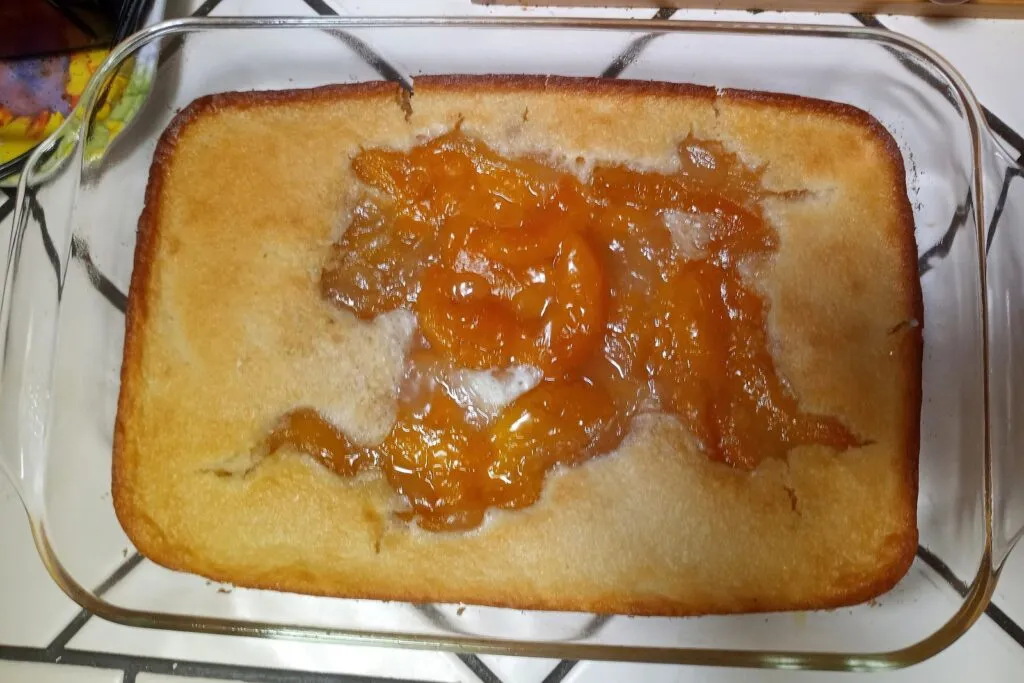
Rest: 15 minutes.
Ingredient notes
Use a shallow 2-quart (1.9-liter) baking dish. Very juicy fruit and very firm underripe peaches behave differently, so the final filling needs practical assessment. Peeling is optional for thin-skinned ripe fruit; remove skin if its texture bothers you. Discard pits and any spoiled areas rather than baking fruit that has deteriorated.
Tips for the best peach cobbler
Choose ripe peaches that still slice cleanly. Firm-ripe fruit releases juice without collapsing immediately. If the skin is thick, peel it first. Taste a slice before adding sugar so you can account for the sweetness of the fruit.
Keep the butter cold. Small pieces create a more tender biscuit topping. Add milk gradually and stop stirring once the dough comes together. Mixing until smooth can make the biscuits dense.
Check both layers before removing the dish. Look for bubbling fruit between the biscuits and lift an edge of one topping mound. The underside should look cooked rather than wet. Cover the top loosely with foil if it browns before the fruit bubbles.
Let the fruit settle before serving. The juices are loose straight out of the oven and thicken slightly as they cool. Rest the dish before spooning it out. If the filling runs over the rim while baking, place the dish on a rimmed sheet to catch drips.
Variations
Vegan peach cobbler
Use firm plant-based baking butter and unsweetened plant milk. Add the milk slowly, since different products change the dough texture. Grease the dish with the same plant-based butter.
With less sugar
Reduce the sugar in the fruit if the peaches are especially sweet. Keep the topping measurements steady for the first bake, since its sugar also affects browning.
With other fruit
Nectarines can replace peaches. Use a separate formula for very juicy frozen fruit or a cake-mix topping, because the filling and topping absorb different amounts of liquid.
What to serve with peach cobbler
Serve warm with vanilla ice cream, unsweetened whipped cream, plain yogurt, or coffee. For a faster topping, see peach cobbler with cake mix or peach cobbler dump cake. For a sliced dessert, try peach upside-down cake.
Storage and reheating
Refrigerate leftovers within 2 hours, or within 1 hour above 90°F (32°C), at 40°F (4°C) or colder. Use within 3–4 days. If serving warm, reheat to 165°F (74°C). Keep whipped cream and ice cream separate.
FAQ
Can I make peach cobbler ahead of time?
Yes. Slice the peaches and refrigerate them separately from the dry topping mixture. Mix the fruit with sugar and cornstarch near baking time so it does not release too much juice in advance. For baked cobbler, cool promptly, refrigerate, and reheat to 165°F (74°C) if serving warm.
How long does peach cobbler keep in the fridge, and can it be frozen?
Use refrigerated cobbler within 3–4 days. Freeze promptly cooled portions if needed, though the biscuit topping may soften. Thaw in the refrigerator and reheat to 165°F (74°C), uncovering near the end to help the top dry. Add fresh cream or ice cream after reheating.
What can I substitute if I don’t have a key ingredient?
Nectarines are the closest fresh substitute. Thawed frozen peaches release more liquid, so drain them before using or follow a recipe designed for frozen fruit. Use buttermilk in the topping if you want more tang, adding it gradually until the dough is just soft enough to scoop.
Photos: Ralph Daily / Wikimedia Commons, CC BY 2.0; NumismaticLinguist / Wikimedia Commons, CC BY-SA 4.0; Lisafern / Wikimedia Commons, CC0, cropped.